
By Birth & Baby University · Last updated: October 2026 · 7 min read
Within the first days of life, nearly every baby in the United States has a heel stick, a hearing screen and a pulse oximetry check. Parents often learn about these tests in the middle of a busy hospital stay and then hear very little until a phone call says “the screen was out of range” or “we need to repeat it.” Postpartum doulas are frequently in the home when that call comes. Knowing what newborn screening is, what each part can and cannot tell a family, and how it varies by state lets a doula keep a worried parent grounded and pointed to the right people. This article summarizes CDC and national resource descriptions of newborn screening, evidence on the accuracy of the heart screen, and research on how false-positive results affect parents.
Key takeaways
Quick answer: newborn screening is a public health program, run by states, that looks for serious conditions before symptoms appear. It has three parts: a heel-stick blood sample, a hearing screen and pulse oximetry for critical congenital heart disease. A screen is not a diagnosis; an out-of-range result means follow-up testing, and most follow-ups confirm a baby is fine. Which conditions are screened for varies by state.
- The CDC’s Grand Rounds report says newborn screening reaches about 4 million U.S. infants a year, that states decide whether and how to regulate screening, that most screening uses dried bloodspot specimens, and that hearing loss and critical congenital heart disease are the two point-of-care conditions on the Recommended Uniform Screening Panel.
- Baby’s First Test says the blood test is generally performed when a baby is 24 to 48 hours old, that screening “is not a diagnostic test,” and that the conditions screened differ in each state, with most states screening for at least 31 of the 35 conditions recommended by the federal advisory committee.
- A meta-analysis of 13 studies (229,421 newborns) found pulse oximetry detected critical congenital heart defects with 76.5% sensitivity and 99.9% specificity, and a false-positive rate of 0.05% when done after 24 hours of age versus 0.50% before 24 hours.
- A scoping review of 24 papers found the impact of false-positive newborn screening results on parents is variable, with some studies showing increased stress and changed perceptions of the child and others showing transient effects.

What the research says
What the program is. Grosse and colleagues’ CDC Grand Rounds report (2017) describes newborn screening as a public health program that benefits 4 million U.S. infants each year by enabling early detection of serious conditions. It states that states and other jurisdictions decide whether and how to regulate newborn screening, that most screening is done through laboratory analysis of dried blood spots, and that point-of-care screening is typically done before discharge. Hearing screening uses otoacoustic emissions or automated auditory brainstem response, was endorsed by the Joint Committee on Infant Hearing and was part of the first Recommended Uniform Screening Panel in 2005. Pulse oximetry screening for critical congenital heart disease was recommended by the federal advisory committee in 2010 and added to the panel in 2011. The goals are early identification and intervention to improve neurodevelopment, particularly language, in infants with permanent hearing loss and to prevent death or severe disability from delayed diagnosis of heart disease.
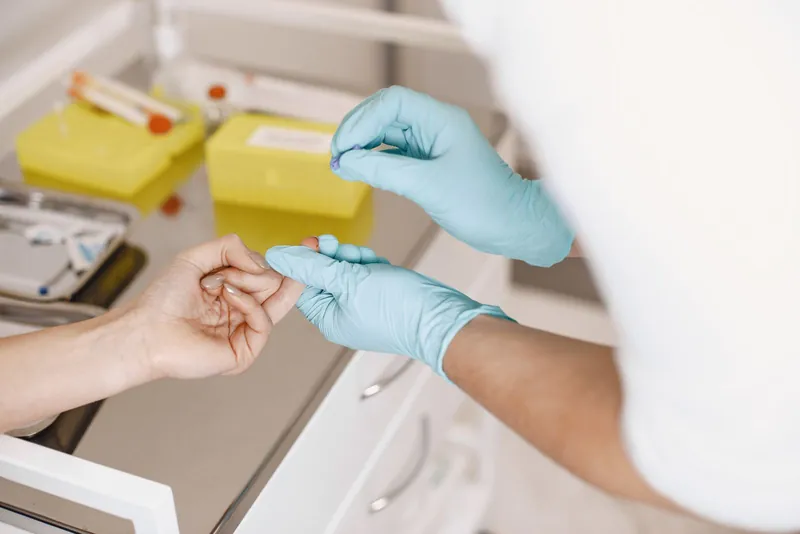
The national resource Baby’s First Test describes the three parts: a heel stick for a small blood sample, pulse oximetry and a hearing screen. It says the blood test is generally done at 24 to 48 hours of age because some conditions may go undetected if blood is drawn before 24 hours, that screening for more than 60 disorders is available but each state health department decides its own panel, that a screening test cannot confirm or rule out a condition and that abnormal screens lead to follow-up testing, that every baby is screened as normal hospital procedure regardless of insurance, and that most states allow parents to refuse for religious reasons, a decision that should first be discussed with a health professional. It suggests nursing or feeding the baby before or after the heel stick, holding the baby and keeping the baby warm to comfort them. Counts on the site vary slightly between pages (for example more than 60 available disorders versus most states screening at least 31 of 35 recommended conditions), which reflects the difference between what is possible and what a state requires.
How good is the heart screen? Thangaratinam and colleagues’ 2012 systematic review and meta-analysis in The Lancet included 13 studies with 229,421 asymptomatic newborns. Pulse oximetry’s overall sensitivity for detecting critical congenital heart defects was 76.5% (95% confidence interval 67.7 to 83.5), specificity 99.9% and false-positive rate 0.14%. The false-positive rate was much lower when screening was done after 24 hours of age than before (0.05% versus 0.50%). The authors concluded that pulse oximetry is highly specific with moderate sensitivity and meets criteria for universal screening. Moderate sensitivity means roughly one in four of the critical defects in these studies was missed by the screen, so a passed screen does not rule out heart disease, and a baby with symptoms needs evaluation whatever the result.
What false alarms do to parents. Chudleigh and Holder’s 2024 scoping review of 24 papers (many on cystic fibrosis) found that the impact of false-positive newborn bloodspot results is variable. Some studies suggest negative effects such as increased stress and changed parental perceptions of the child, while others suggest effects are transient and, in some cases, even lead to positive outcomes. The authors note a need for evidence on conditions beyond cystic fibrosis and for strategies to reduce harm. This is relevant because most out-of-range screens are not confirmed.

What this means for doulas
- Explain screening in plain terms. “It looks for rare conditions early so treatment can start before a baby gets sick. It is not a diagnosis.”
- Know the three parts. Heel stick (usually at 24 to 48 hours), hearing screen and pulse oximetry, usually before discharge.
- If results come back out of range, stay calm and practical. Help the family find out who is following up and when, and encourage them to complete repeat testing promptly rather than waiting. Do not interpret the result.
- Do not reassure with certainty. A passed heart or hearing screen does not rule out every problem, per the meta-analysis and CDC description. A baby who looks unwell still needs a clinician.
- Respect opt-out decisions but refer. If a family is considering declining, encourage a conversation with the pediatric provider first, as Baby’s First Test advises.
Putting the evidence into practice
- Ask if screening was completed. Heel stick, hearing and heart screens. If a baby was born at home or discharged early, ask who arranged them.
- Help with comfort. Feeding, holding and warmth during a heel stick are suggestions from the resource above.
- Keep a list of questions. Which conditions does our state screen for? When will results arrive? Whom do we call?
- Support follow-up. If a repeat is needed, help with logistics and keep appointments on the calendar.
- Look after the parent. A callback is frightening. Listen, give accurate information about what screening is, and help them reach the provider.
For red flags that need immediate care whatever the screening results, see Recognizing When a Newborn Needs Medical Evaluation: Essential Red Flags for Postpartum Doulas.
Limits and uncertainty
Newborn screening panels, timing, and follow-up procedures differ by state and hospital, and the federal panel changes over time, so the numbers in this article reflect the sources’ dates (the CDC report is from 2017, the heart screen meta-analysis from 2012, and Baby’s First Test is a resource site with its own variations). The federal panel page could not be read directly because the site blocked access, so conditions are not listed. This article draws on the abstract of the CDC report and the heart screening and scoping reviews, and the full text of the Baby’s First Test page. Screening for rare conditions is evolving, and home births and early discharges may follow different arrangements. This article does not discuss specific conditions.
The bottom line
Newborn screening is a state-run program of a heel stick, a hearing screen and a heart oxygen check designed to find serious conditions early. A screen is not a diagnosis; most out-of-range results are false alarms but each one needs follow-up, and a passed screen does not exclude every problem. A doula can explain the purpose, help families complete follow-up and support them through the anxiety of a callback, leaving interpretation to the baby’s clinicians.
Birth & Baby University’s For Doulas page sets out its postpartum doula training, recertification and mentorship for doulas who support families through the newborn weeks. Confirm that any program meets your certifier’s, employer’s or state’s requirements before you enroll.
This article is for professional education. It is not medical, legal or tax advice. Check the standards of your certifying organization and the rules where you work. For concerns about a baby’s health, contact a pediatric provider or emergency services.
Sources and further reading
- Grosse SD, et al. CDC Grand Rounds: newborn screening for hearing loss and critical congenital heart disease. MMWR (2017). Read the source
- Baby’s First Test. Newborn Screening 101. Read the source (read October 2026)
- Thangaratinam S, et al. Pulse oximetry screening for critical congenital heart defects in asymptomatic newborn babies: a systematic review and meta-analysis. The Lancet (2012). Read the source
- Chudleigh J, Holder P. Psychosocial impact of false-positive newborn screening results: a scoping review. Children (2024). Read the source
More for professionals: the Professionals Blog.


Leave a Reply