
By Birth & Baby University · Last updated: October 2026 · 8 min read
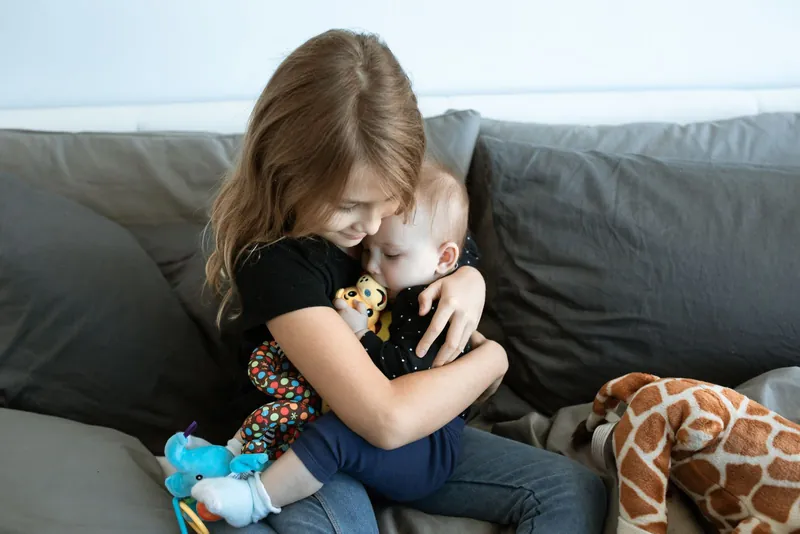
When a new baby arrives, the older child’s world changes too, and postpartum doulas see this daily: a preschooler who suddenly wants a bottle, a toddler hovering over the bassinet, a school-aged child who goes quiet. Advice abounds, and much of it assumes that a new sibling is a crisis. The research is more balanced. It suggests that many children adjust well, that some show real distress, that behaviors vary widely and that the family context shapes outcomes. This article summarizes the American Academy of Pediatrics’ (AAP) age-based guidance, what a review of 30 studies and later longitudinal research show, and what practical, developmentally appropriate support a doula can offer without labeling a child’s reactions as problems.
Key takeaways
Quick answer: the AAP advises preparing children according to age, giving one-on-one time, involving them in age-appropriate ways and expecting some regression in preschoolers. Research finds large individual differences: the transition can be disruptive, can bring developmental gains or can pass with no change, and the evidence does not support the idea that it is a crisis for most children. Persistent distress or aggression warrants a conversation with the child’s pediatric provider.
- A review of 30 studies concluded the evidence did not support a crisis model of the transition to siblinghood, found decreases in children’s affection and responsiveness toward mothers but equivocal results for sleep problems, anxiety, aggression and regression, and described large individual differences.
- In a study of 224 families, observed firstborn responses to parent-infant interaction at one month fell into profiles; the normative “regulated exploration” pattern held for 60% of children, only 2.7% showed a disruptive pattern, and children with an approach-avoidant pattern had more behavior problems at 4 months.
- In 230 firstborns followed from before the birth to 12 months after, attachment security to mothers was associated with emotion understanding before the sibling’s birth, but no bidirectional relation was found over time, suggesting other family dynamics may matter.
- The AAP says to expect preschoolers to regress a little and to respond with attention rather than telling them to act their age.
What the research says
What the AAP recommends. The AAP’s page Preparing Your Family for a New Baby (updated February 2026) is organized by age. For toddlers aged 1 to 2 it suggests bringing up the topic, reading books about newborns and siblings, reassuring the child that they are loved, planning one-on-one time with parents, grandparents or other family and explaining that the baby sometimes needs to be cared for first. For preschoolers aged 2 to 4 it suggests talking about the baby in everyday moments, looking at the child’s baby photos, offering a doll, being honest that the baby will cry and take time and attention, involving the child in planning, timing big changes like toilet training or a move from crib to bed before the baby arrives or putting them off until the baby is settled, and preparing the child for the parent’s hospital stay. After the birth it advises expecting some regression, such as accidents or wanting a bottle, calling it normal and a way of making sure the child still has love and attention, setting aside special time, inviting the child to help, asking visitors to spend time with the older child and having the child cuddle next to a feeding parent. For children 5 and older it says they are usually less threatened but may resent the attention the baby gets, and suggests age-appropriate explanations, a role in preparing and caring for the baby, bringing the child to meet the baby, asking before holding, and time alone with them each day.
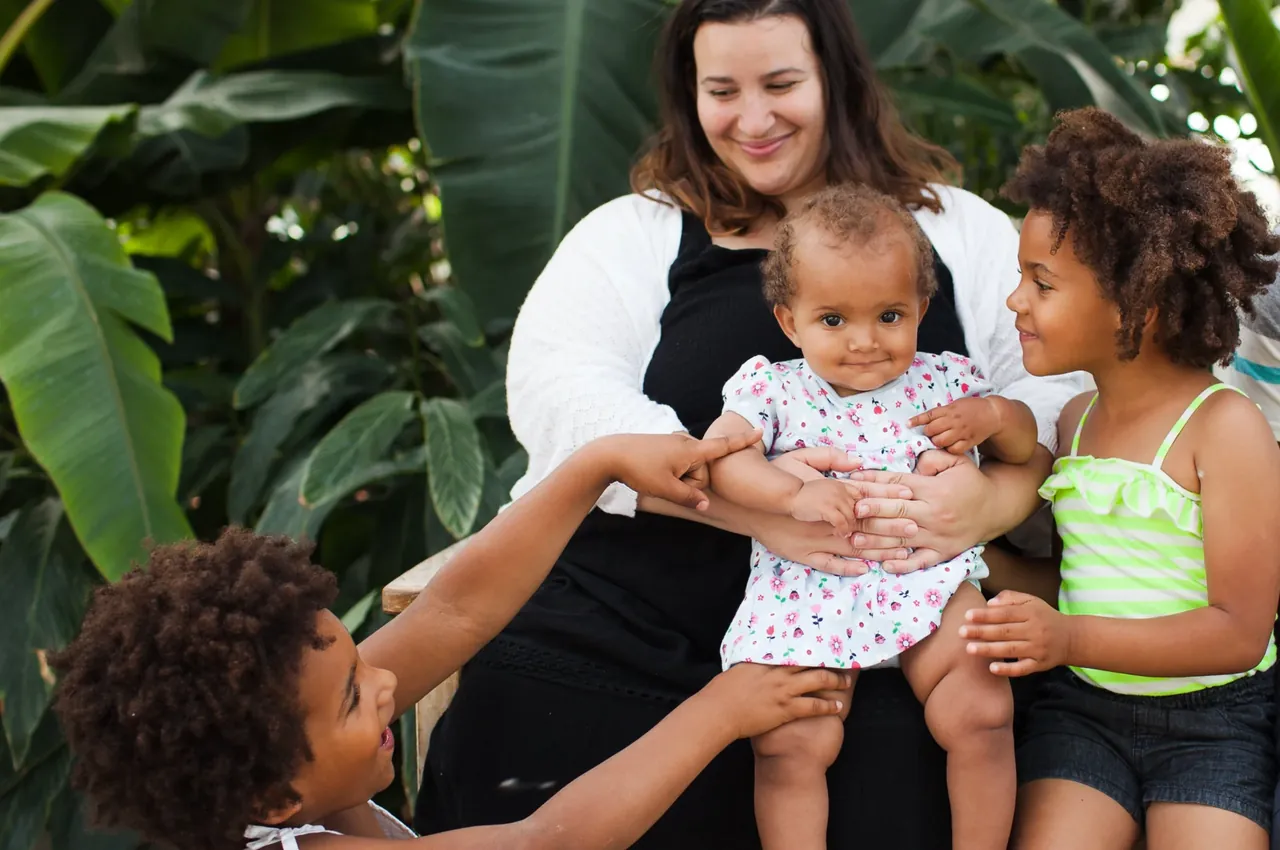
Is the transition a crisis? Volling’s 2012 review in Psychological Bulletin notes that nearly 80% of U.S. children have at least one sibling, so the birth of a sibling is a normal transition for most. It found 30 studies on firstborns’ adjustment and concluded that the evidence did not support a crisis model or consistent changes in adjustment. There were decreases in children’s affection and responsiveness toward mothers, while results were more equivocal for sleep problems, anxiety, aggression and regression. The author describes large individual differences: the transition can be a time of disruption, an occasion for developmental advances or a quiet period, depending on the child, parent and context. This means the AAP’s “expect regression” is a reasonable preparation, but regression is not a universal finding in the research. Volling and colleagues (2014) observed 224 families at one month after the birth. They identified four behavioral profiles for mother-infant and father-infant interaction: regulated exploration, disruptive-dysregulated, approach-avoidant and anxious-clingy, plus an attention-seeking profile with fathers. Regulated exploration was the normative pattern (60%), with few children in the disruptive class (2.7%). Approach-avoidant children had more behavior problems at 4 months than most other classes, and disruptive children were higher on aggression and attention problems. The authors emphasize individual differences and a person-centered approach to jealousy. Parent-reported problem behaviors and a single research site are limits.
Longitudinal clues about what helps. Tan, Bader, Volling and Gonzalez’s 2026 study followed 230 firstborns (mean age about 30 months) at three points: before the birth, and 4 and 12 months after. Attachment security to mothers was associated with emotion understanding before the birth, but the authors found no bidirectional relations over time between emotion understanding and attachment security to either parent, and suggested that other family-level dynamics, such as early interactions with the baby, may account for growth in emotion understanding after the birth. A second analysis from the same research group, Al Bcherraoui and colleagues (2026), studied 184 second-born toddlers and found that attachment configurations did not predict toddlers’ behavior problems, and that older siblings’ behavior problems predicted toddler behavior problems from 18 to 36 months, which is a reminder that siblings affect each other. Both studies are exploratory and come from the same research program in the US (the first sample was 86% White), so they do not tell us what a doula’s actions would change.
What this means for doulas
- Welcome the older child. Greet them first, ask about them, and include them in small roles. The AAP lists inviting them to help and arranging one-on-one time among its main suggestions.
- Normalize without predicting. “Some children want more attention or act younger for a while, and many do fine” matches both the AAP and the review.
- Do not label. A child who is clingy, loud or quiet is adjusting. The profiles in the research show that approach-avoidant or disruptive behavior is a minority pattern worth mentioning to a pediatrician if it persists, not a diagnosis.
- Protect the baby, gently. Teach supervised, gentle contact, and never leave a young child alone with a newborn.
- Offer parents tools, not scripts. Help them find small daily pockets of attention for the older child and invite relatives and visitors to give that attention.
Putting the evidence into practice
- Learn the older child’s name, age and routine and ask what they are curious about.
- Offer a job. Fetch a diaper, choose a book to read to the baby, sing, or help with a gentle wipe, matched to age.
- Schedule a few minutes of focused time each day that is not interrupted by the baby, even 10 minutes with a parent or another trusted adult, as the AAP suggests.
- Expect and name feelings. “It’s hard when Mama is busy with the baby” validates without blaming the baby.
- Know when to refer. Marked aggression toward the baby, loss of skills that persists, sleep or eating changes that do not settle, or a child who seems persistently sad or withdrawn should be raised with the child’s pediatric provider.
For related family topics see How the Transition to Parenthood Affects Couple Relationships and Understanding Parental Mental Load During the Newborn Period.
Limits and uncertainty
The 2012 review is more than a decade old and predates much newer research. The longitudinal studies are from one research program in the US, use parent reports and observation in specific settings, and the 2026 papers are exploratory. No trials were found showing that particular preparation strategies improve outcomes, so the AAP suggestions rest on developmental knowledge and clinical experience. This article draws on the AAP page in full and the abstracts of the research. This article does not review studies of sibling adjustment after adoption, in blended families, after a preterm birth or when a baby has a medical condition, where needs differ.
The bottom line
A new baby changes an older child’s world, but the research does not support the idea that it is a crisis for most children: responses vary widely, from distress to developmental gains to no change. The AAP’s suggestions, which include honest preparation, special time and inclusion, are reasonable and low-risk. A doula can support the whole family by including the older child, reassuring parents about the range of normal and suggesting a pediatric conversation when distress persists.
Birth & Baby University’s For Doulas page sets out its postpartum doula training, recertification and mentorship for doulas who support families, including older siblings, in the newborn weeks. Confirm that any program meets your certifier’s, employer’s or state’s requirements before you enroll.
This article is for professional education. It is not medical, legal or tax advice. Check the standards of your certifying organization and the rules where you work. For concerns about a baby’s health, contact a pediatric provider or emergency services.
Sources and further reading
- American Academy of Pediatrics. Preparing Your Older Child for a New Baby: How to Help Siblings Adjust (HealthyChildren.org, updated February 2026). Read the source
- Volling BL. Family transitions following the birth of a sibling: an empirical review of changes in the firstborn’s adjustment. Psychological Bulletin (2012). Read the source
- Volling BL, et al. Children’s responses to mother-infant and father-infant interaction with a baby sibling: jealousy or joy? Developmental Psychology (2014). Read the source
- Tan L, et al. Children’s emotion understanding and attachment security to mothers and fathers across the transition to siblinghood. Journal of Family Psychology (2026). Read the source
- Al Bcherraoui M, et al. Attachment network, interparental conflict, and older siblings’ behavior predicting toddler behavior problems. Journal of Family Psychology (2026). Read the source
More for professionals: the Professionals Blog.



Leave a Reply