

By Birth & Baby University · Last updated: October 2026 · 7 min read
Fathers and partners are present at most births and at home through the postpartum weeks, yet perinatal care has been designed mostly around the person who is pregnant. That is changing. Researchers now study partners’ own mental health, test whether involving them improves outcomes for the family, and ask what support they need. The findings are promising in places and thin or null in others. This article summarizes what recent studies show, what they cannot show, and how doulas can include partners in a way that fits the role.
Key takeaways
Quick answer: partners’ own perinatal distress is common enough to matter and is associated with child development, though the associations are small. Randomized trials of involving fathers in infant feeding and infant care show benefits in some outcomes, but father involvement did not improve maternal smoking cessation in a pooled analysis. Evidence on community support aimed at fathers’ mental health is limited. Most of the research concerns fathers and male partners, and evidence for other kinds of partners is thinner.
- A 2025 meta-analysis of 48 cohorts found paternal perinatal depression, anxiety and stress associated with poorer child global, cognitive and language development, with small effect sizes, and stronger associations for postnatal than antenatal distress.
- A 2026 randomized trial of 649 postpartum parents found a father-involvement telephone support program increased exclusive breastfeeding at one month and any breastfeeding through six months.
- A pooled analysis of smoking cessation trials found father involvement did not significantly improve maternal cessation (odds ratio 1.12), though father-directed interventions helped fathers quit.
- A 2026 systematic review of 18 studies of community interventions for fathers’ mental wellbeing found themes of connection, validation and confidence, but described the evidence on effectiveness as limited.

Partners’ own mental health
Sobol and colleagues (2026) reviewed 37 studies, 16 in meta-analysis, on factors associated with paternal perinatal anxiety in non-clinical populations. Higher paternal depressive symptoms, low social support and high maternal anxiety were associated with higher paternal prenatal anxiety, and anxiety after birth was linked to prenatal anxiety, postpartum depressive symptoms, negative birth memories and maternal anxiety. The authors emphasize continuity of anxiety across the perinatal period and call for family-centered support. These are associations in observational studies, so they do not show what causes what.
Le Bas and colleagues (2025) synthesized 48 cohorts from 84 studies on paternal perinatal depression, anxiety and stress and offspring development over 18 years. Paternal distress was associated with poorer global, cognitive and language development, and with small associations for social-emotional and physical outcomes, with no evidence for adaptive and motor outcomes. Associations were generally stronger for postnatal than antenatal distress. The correlations were small (for example, r of -0.12 for global development), and the studies were observational, so they do not establish that treating paternal distress would improve child development.
Does involving fathers improve outcomes?
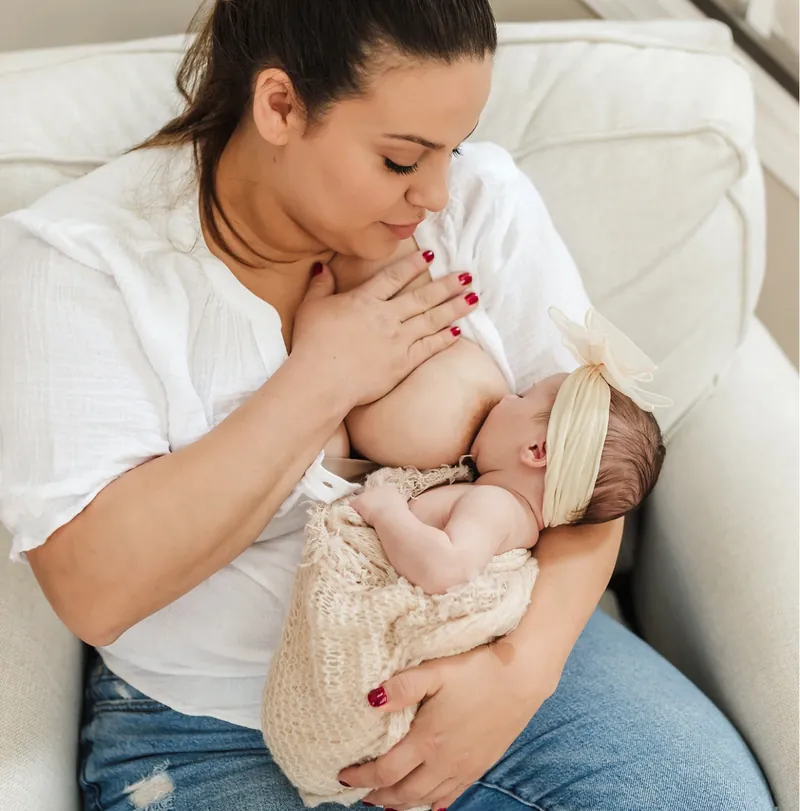
Infant feeding. Ngai and colleagues (2026) randomized 649 postpartum parents from four regional public hospitals to a father-involvement breastfeeding telephone support intervention or standard care. Mothers in the intervention group were more likely to be exclusively breastfeeding at one month (mean difference 6.7 percent) and to be breastfeeding to any degree at one, two, four and six months (differences of 8.2 to 9.6 percent), and less likely to stop any breastfeeding over six months (hazard ratio 0.54). The authors conclude that including fathers is worthwhile. The abstract reports a significant difference in exclusive breastfeeding only at one month.
Bonding and mood. A small randomized trial of 63 mothers and fathers (Yildirim and Sahin, 2025) gave fathers infant care training in the first hours after birth with follow-up calls. Fathers in the intervention group had higher father-infant attachment scores, and mothers had lower depression scores at 4, 8 and 12 weeks and higher quality-of-life scores. With 63 participants, the study is promising but small, and it should be repeated.
Where involvement did not help. A systematic review and meta-analysis of smoking cessation in pregnancy (Barrera and colleagues, 2026) found that father involvement did not significantly improve maternal cessation (odds ratio 1.12), although father-directed interventions were highly effective for paternal cessation (odds ratio 2.18). The authors note the father-involvement evidence derives from four trials. This is a useful reminder that “involving partners” is not one intervention, and the right design depends on the goal.
Support for fathers’ mental wellbeing
Baldwin and colleagues (2026) reviewed 19 papers representing 18 studies of community-accessible interventions to promote fathers’ mental health in the perinatal period, including peer support, psychoeducation and digital approaches. They synthesized six findings, including reduced isolation, validation in safe spaces, strengthened paternal identity and confidence, better father-infant bonding, improved partner relationships and increased knowledge and coping skills. The authors note that evidence on effective community-based interventions remains limited. The review includes qualitative studies of acceptability, which tell us what participants valued, not what the programs achieved on clinical measures.
Who counts as a partner?
The studies above concern fathers and male partners in the main. Birth and postpartum partners include other parents and supporters, such as a spouse of any gender, a co-parent who did not give birth, or a family member, and the abstracts reviewed here do not report on them separately. It is wise not to assume the findings apply identically to everyone, and to ask each client who their support people are and what role they want them to have.
What this means for doulas
- Ask who is in the support circle. At intake, ask who will support the client and how they would like that person involved.
- Include partners in education. Invite partners to prenatal sessions, teach practical comfort and feeding support, and cover postpartum realities, such as sleep loss and mood changes.
- Normalize partners’ feelings. Partners can have anxiety and depression too. Doulas do not diagnose, but they can mention that partners may also need support and encourage them to speak to a clinician if distress persists.
- Do not over-assign roles. Involvement helps in some outcomes and not others, and it should not be a source of pressure. Respect the client’s wishes about who is present.
- Be alert to safety. Not every partner is a source of support. If a client signals fear of a partner, follow your training and local protocols for safety and referral.
Putting it into practice
- Add a question about support people to your intake form, and revisit it in the third trimester.
- Prepare a short partner guide that covers comfort measures, feeding support, practical help at home and what to do if worried.
- Offer at least one session or part of a session that includes the partner, if the client agrees.
- Share a list of resources for partners, including peer support and mental health services, with checked contact details.
- Read our related article on baby blues versus postpartum depression and the signs that call for medical attention.
Limits and uncertainty
Most of the evidence is observational, and the trials are small or single-purpose. Pooled effects for paternal distress and child outcomes are small. The sources concentrate on fathers and male partners and on specific outcomes, and they come from several countries with different health systems. Nothing here shows that doula-led partner involvement improves outcomes.
The bottom line
Partners are an increasingly visible part of perinatal care. Their own distress matters, involving them can help with some outcomes such as breastfeeding, and community support for fathers appears welcome but unproven. Doulas can include partners in education and support while respecting the client’s choices and staying within scope.
Birth & Baby University’s For Doulas page outlines its online, self-paced birth and postpartum doula training, recertification and mentorship, for doulas who support whole families.
This article is for professional education. It is not medical, legal, financial or tax advice. Check the standards of your certifying organization and the rules where you work.
Sources and further reading
- Sobol M, Mancinelli E, Blachnio A, Salcuni S. Correlates of paternal anxiety during the perinatal period: systematic review and meta-analysis. Public Health (2026). Read the source
- Le Bas G, Aarsman SR, Rogers A, et al. Paternal perinatal depression, anxiety, and stress and child development: a systematic review and meta-analysis. JAMA Pediatrics (2025). Read the source
- Ngai FW, Lam YYW, Lam COC, Chan PS. Effect of father-involvement telephone support on breastfeeding: a multicentre randomised controlled trial. International Journal of Nursing Studies (2026). Read the source
- Yildirim F, Sahin E. Does father involvement affect attachment and maternal depression and quality of life? A randomized controlled trial. Family Practice (2025). Read the source
- Barrera B, Ahmed F, Brand T, Zeeb H. Smoking cessation in pregnancy: a systematic review and meta-analysis of vulnerability approaches and expectant father involvement. Public Health Reviews (2026). Read the source
- Baldwin S, Gilroy V, Kendall S. Community-based interventions to promote paternal mental wellbeing and prevent poor mental health during the perinatal period: a mixed methods systematic review. Frontiers in Public Health (2026). Read the source
More for professionals: the Professionals Blog.


Leave a Reply