

By Birth & Baby University · Last updated: October 2026 · 3 min read
Many clients ask whether a TENS unit is worth renting. The answer depends on which review you read. The Cochrane review found little difference in pain ratings, a later meta-analysis found a small benefit, and a more recent trial found a larger one. This article explains why they differ and how to describe TENS without overselling it.
Key takeaways
- The Cochrane review of 19 studies found little overall difference in pain ratings, no consistent effect on other outcomes and no reported adverse events.
- A 2020 meta-analysis of 26 trials found a small but statistically significant pain benefit, while rating most studies at high risk of bias.
- A 2021 trial of 326 women reported lower pain scores and a shorter active phase, but participants and staff knew who received TENS and registration was retrospective.
- TENS is a low-risk option that some women like. It should be offered as a choice, not as proven pain relief.

What the research says
The Cochrane review
The Cochrane review included 19 studies with 1,671 women. Fifteen applied TENS to the back, two to acupuncture points and two to the cranium. Overall there was little difference in pain ratings between TENS and control groups, although women receiving TENS at acupuncture points were less likely to report severe pain (RR 0.41, 95% CI 0.32 to 0.55). Most TENS users said they would use it again. Where TENS was added to an epidural there was no evidence it reduced pain. The review found no consistent effect on interventions or outcomes and no adverse events, and noted that home use in early labor had not been evaluated. Its conclusion: limited evidence for reduced pain, women should have the choice of using it.
A later meta-analysis
A 2020 systematic review and meta-analysis of 26 randomized trials with 3,348 women reported significant pain reduction with TENS (pooled RR 1.52, 95% CI 1.35 to 1.70). Its authors described the effect as small, noted that most studies had a high risk of bias and low quality, and said it was unclear whether the poor quality affected the result.
A recent trial
A single-blind randomized trial of 326 low-risk women compared TENS in the first stage with routine care. Pain scores were significantly lower at 30, 60 and 120 minutes and afterward in the TENS group, and the active phase was shorter. Participants, midwives and clinical researchers knew the allocation, only statisticians were blinded, and the trial was registered retrospectively. Since pain is self-reported, unblinded participants can easily influence the results.
Where it fits among options
The Cochrane overview of pain management reviews placed TENS among interventions with insufficient evidence to judge whether it is more effective than placebo or other interventions, in contrast to epidural and inhaled analgesia, which it listed as effective, and water immersion, relaxation, acupuncture and massage as “may work.”
Why the findings differ
The Cochrane and 2020 reviews pooled different numbers of trials with different designs. Trials differ in where electrodes are placed, in settings and in control conditions, and pain measures are subjective. A device that produces a tingling sensation is hard to blind. So the fair summary is that TENS may help a little for some people, and the evidence cannot say who.
What this means for doulas
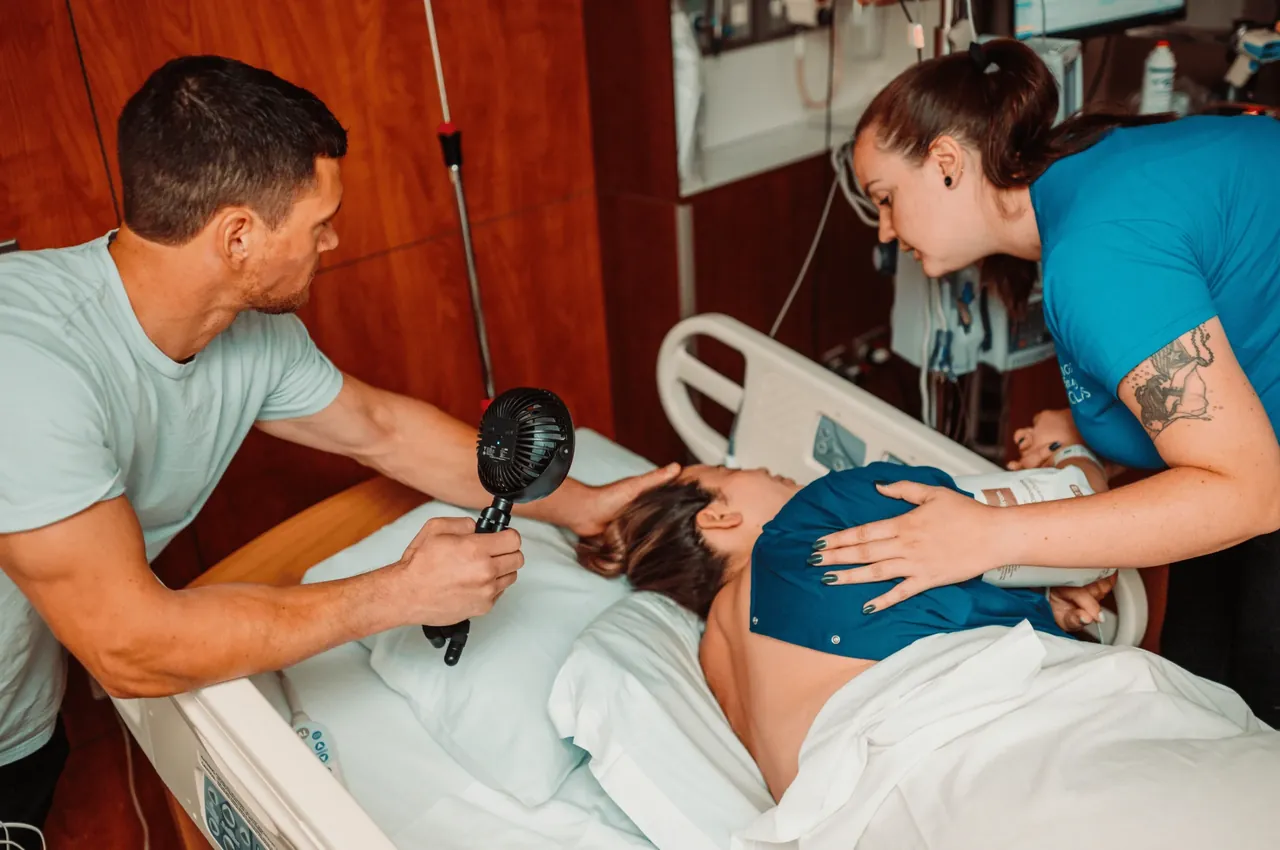
- Describe TENS as an option some people like. Avoid saying it reduces pain by a particular amount.
- Do not use it to replace other care. It did not reduce pain when added to an epidural in the Cochrane review.
- Check the facility’s policy. Hospitals differ about TENS units and monitoring equipment. Ask early, and follow the device instructions and the care team’s advice about safe use.
- Time it deliberately. Early labor use at home has not been evaluated in the trials Cochrane reviewed. Treat that as an open question.
Putting the evidence into practice
- If a client is considering TENS, share the reviews’ findings in plain language and let them decide whether trying it is worth the cost.
- Practice with the unit during pregnancy so the family can use it confidently.
- Keep other comfort options ready, because TENS may do little for some people.
- Tell the nurse or midwife when a unit is in use so the equipment and monitoring can be coordinated.
The bottom line
TENS is low risk and appreciated by many users, but evidence that it reduces pain is limited and of low quality. Doulas can support a family’s wish to try it while keeping expectations modest and other options ready.
This article is for professional education. It is not medical, legal or tax advice. Check the standards of your certifying organization and the rules where you work.
Sources and further reading
- Dowswell T, et al. Transcutaneous electrical nerve stimulation (TENS) for pain relief in labour. Cochrane Database of Systematic Reviews 2009. Read the source
- Thuvarakan K, et al. Transcutaneous Electrical Nerve Stimulation As A Pain-Relieving Approach in Labor Pain: A Systematic Review and Meta-Analysis of Randomized Controlled Trials. Neuromodulation 2020. Read the source
- Njogu A, et al. The effects of transcutaneous electrical nerve stimulation during the first stage of labor: a randomized controlled trial. BMC Pregnancy and Childbirth 2021. Read the source
- Jones L, et al. Pain management for women in labour: an overview of systematic reviews. Cochrane Database of Systematic Reviews 2012. Read the source
Learning when and how to introduce comfort tools is part of doula preparation. See the training and mentorship options on the For Doulas page.
More for professionals: the Professionals Blog.



Leave a Reply