

By Birth & Baby University · Last updated: October 2026 · 8 min read
Ask a new parent what their baby is doing and you will often hear “sleeping,” “fussy” or “awake,” as if those were three settings on a switch. Newborns actually move through a series of recognizable behavioral states, and the skill of reading them is one of the most practical things a postpartum doula can bring into a home. This article describes the commonly used six-state framework, what is known (and not known) about the research behind it, and how to use it without drifting into assessment or diagnosis.
Key takeaways
Quick answer: newborn behavioral states are a descriptive way of sorting what a baby is doing, from deep sleep through quiet alertness to crying. They help parents choose a good moment to feed, play or settle, but they are an observation tool, not a medical test.
- The American Academy of Pediatrics’ parent site lists six states: deep sleep, light sleep, drowsiness, quiet alert, active alert and crying. It describes quiet alert as an ideal time to interact because the baby is awake, calm and attentive.
- Different sources name the awake states slightly differently. The Brazelton Centre UK parent poster uses “fussing” where the AAP table uses “active alert.”
- Sleep researchers score infant sleep and wake states with brain-wave and breathing recordings. A 2016 review for the American Academy of Sleep Medicine notes that, in babies younger than 2 months, wide open eyes are the most crucial sign of wakefulness and that regular versus irregular breathing is the most useful recording feature for telling sleep stages apart.
- Teaching parents to read behavior is popular, but the Cochrane review of the two best-known programs (NBAS and NBO) found only very low-quality evidence for better parent-infant interaction.
What the research says
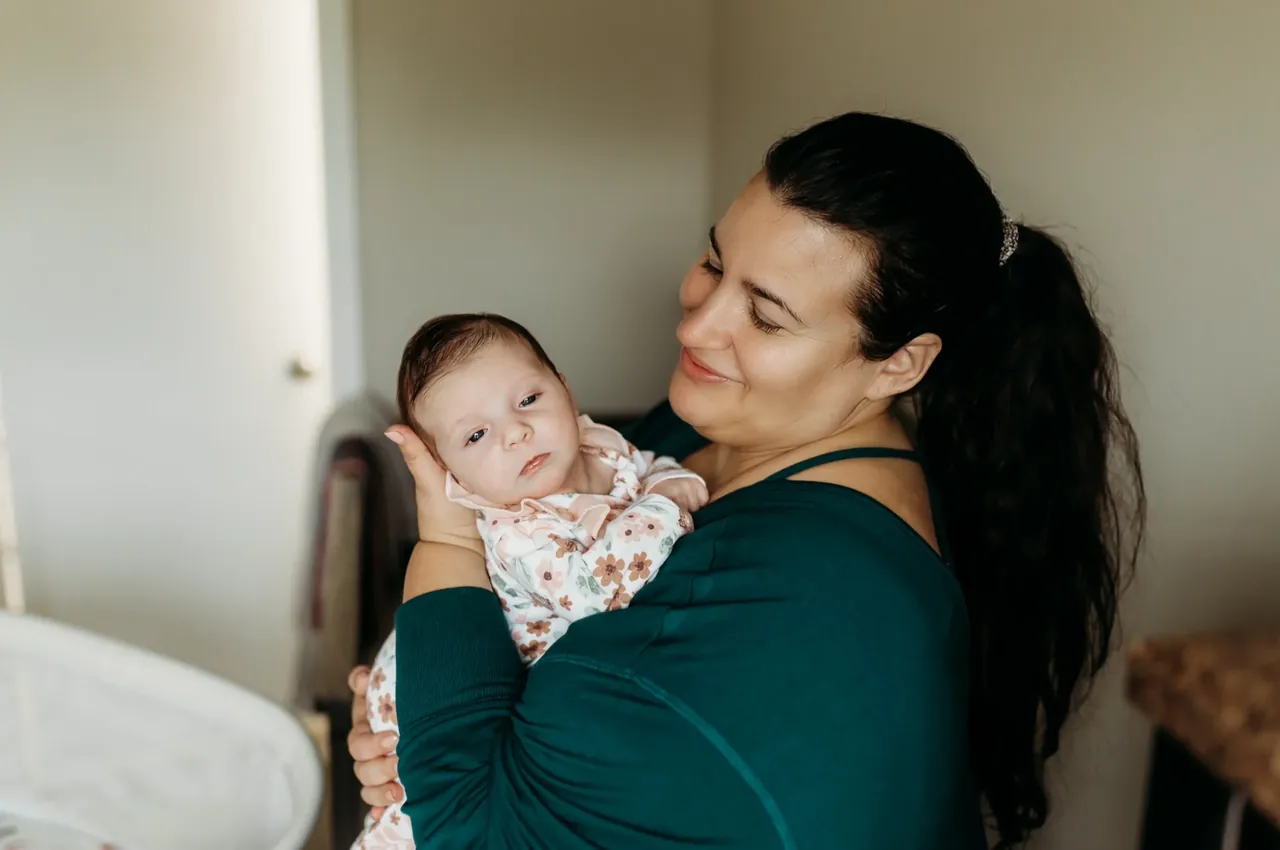
The six-state framework. The AAP’s HealthyChildren.org page on states of consciousness in newborns, adapted from Caring for Your Baby and Young Child: Birth to Age 5 (8th edition, 2024) and shown as last updated in September 2026, presents a table of six states. State 1 is deep sleep, where the baby lies quietly without moving. State 2 is light sleep, where the baby moves while sleeping and startles at noises. State 3 is drowsiness, where the eyes start to close and the baby may doze. State 4 is quiet alert, with eyes open wide, a bright face and a quiet body. State 5 is active alert, where face and body move actively. State 6 is crying, where the baby cries, perhaps screams, and the body moves in very disorganized ways. The page says that learning to recognize these states can help parents understand a baby’s cues, and it singles out the quiet alert state as an ideal time to talk, sing, read and make eye contact.
The Brazelton Centre UK’s behavioural states poster for parents uses the same general structure but groups the states into sleep states (deep sleep, light sleep, drowsy) and awake states (quiet alert, fussing, crying). It is written in the baby’s voice. In deep sleep, the eyes are closed with no eye movements, breathing is soft and regular, and the body is still apart from an occasional startle or sucking movement. In light sleep, the eyes may flutter with rapid eye movements visible under the lids, there may be body and face movements, and breathing may be more irregular, so the poster suggests keeping noise down if parents want the baby to keep sleeping. In quiet alert, the eyes are open and bright and the body is relaxed and still, and the poster notes that babies this age can hold this state only briefly and will show when they need a break. The fussing state is described as the baby’s way of telling the caregiver that something is bothering them and needs to change, and the suggestions are to slow things down or change position; the baby may be hungry, tired, need a diaper change, or want more interaction. The poster describes crying as the baby saying they need something different.
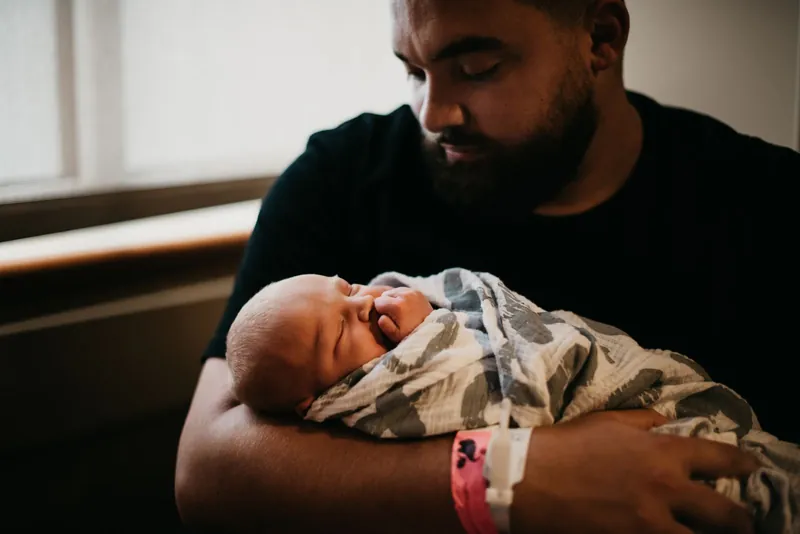
How researchers define states. Behavioral labels are a bedside simplification of something studied more precisely in sleep labs. Grigg-Damberger’s 2016 review in the Journal of Clinical Sleep Medicine summarizes the background to the American Academy of Sleep Medicine’s rules, published on July 1, 2015, for scoring sleep and wake in full-term infants from birth to 2 months. In those rules, sleep and wake are scored in 30-second epochs as wakefulness, REM sleep, NREM sleep or transitional sleep. The review says that sleep onsets are more often REM sleep until 2 to 3 months after term, that drowsiness is best characterized by visual observation, that wide open eyes are the most crucial determinant of wakefulness, and that regularity or irregularity of breathing is the single most useful polysomnographic characteristic for scoring sleep stages at this age. For a doula the takeaway is not a scoring technique. It is that the “light sleep” that looks restless (twitching, irregular breathing, fluttering eyes) is a recognized, normal part of infant sleep and not necessarily a sign that a baby is waking.
Does teaching parents about states help? The Brazelton Institute describes its Newborn Behavioral Observations (NBO) system as a relationship-based tool of 18 neurobehavioral observations, designed for use from birth through the third month, that offers parents individualized information about their baby’s communication. It says explicitly that the NBO is not an assessment, and it names doulas among the professionals who use it. The evidence is more limited than the enthusiasm. A Cochrane review by Barlow and colleagues (2018) of the Neonatal Behavioral Assessment Scale (NBAS) and NBO included 16 randomized trials with 851 participants, all conducted in the United States and all judged at high risk of bias. Seven studies with 304 participants contributed to a meta-analysis of caregiver-infant interaction, with a significant medium-sized difference (standardized mean difference -0.53, 95% confidence interval -0.90 to -0.17), but the authors rated the evidence as very low quality. One study found a gain in caregiver knowledge, there was no evidence of an effect on maternal depression, and no adverse effects were identified. The authors concluded that evidence was very low quality for mostly low-risk, first-time caregivers and that more research was needed. In short: the vocabulary is widely used and plausible, but there is no strong trial evidence that teaching it changes outcomes for families.
What this means for doulas
- States describe the moment, not the baby’s character. A baby is not “a bad sleeper” or “a fussy baby” because they spend time in active states. They are passing through states, and the sequence matters more than any single label.
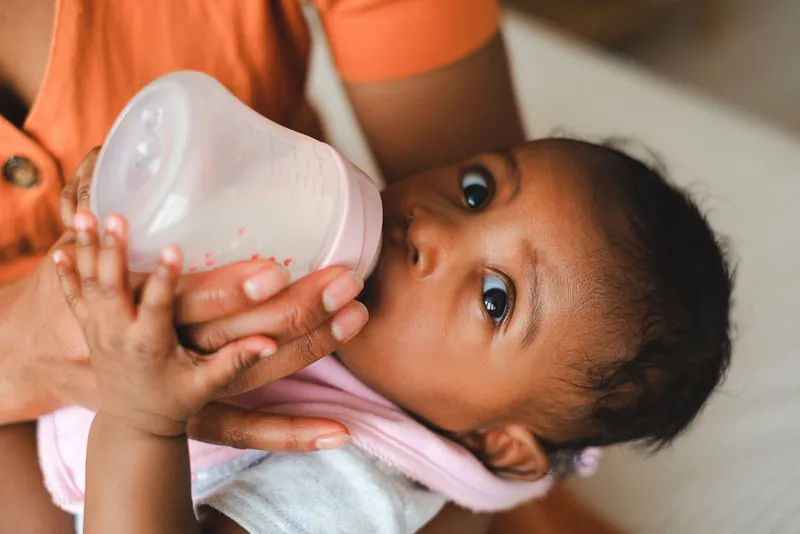
- Timing is the practical gain. Quiet alert is when many babies take in faces and voices, so it is a good window for talking, singing or looking together. Drowsiness and light sleep are common moments to settle a baby who is tired. A baby in the fussing or crying range may need a change, a feed, closeness or a break rather than more stimulation.
- Help parents see the transitions. A baby who moves from quiet alert to looking away, then fussing, is often telling the adult that they have had enough. Naming that early (“I notice her eyes are wandering; maybe she needs a break”) is more useful than a list of definitions.
- Notice what is normal in light sleep. Twitching, small sounds and irregular breathing in light sleep can look alarming to parents. Explaining that these are recognized features of infant sleep can lower anxiety without making a medical claim about any particular baby.
- Stay in scope. Observing states is not examining a newborn. A doula does not use state observations to judge neurological health, rule out illness or tell parents that a pattern is or is not abnormal.
Putting the evidence into practice
- Use plain words with parents. The six states are easy to remember when you pair each with a picture, such as “eyes bright, body still” for quiet alert.
- Observe before you teach. Sit with the family for a feed or a diaper change and watch one cycle of states, then describe what you saw in the parent’s own baby rather than reciting a chart.
- Offer options, not rules. If a baby is in quiet alert, a parent may want to talk and look together, or may prefer to let the baby rest. Both are fine. The framework gives choices, not a schedule.
- Link states to feeding and sleep cues. For the early hunger and fullness signs that appear across states, see How Newborns Communicate: Understanding Early Hunger, Stress, and Engagement Cues. For how newborn sleep is organized across the day and night, see Understanding Newborn Sleep Cycles.
- Know when to refer. If a parent says a baby is unusually hard to wake, will not feed, seems to be breathing with effort or looks unwell, encourage them to contact the baby’s pediatric provider or emergency services right away. State observation never replaces that call. See also Recognizing When a Newborn Needs Medical Evaluation: Essential Red Flags for Postpartum Doulas.
Limits and uncertainty
The six-state framework is a descriptive convention, and sources do not agree on every label, as the difference between “active alert” and “fussing” shows. The lab-based scoring rules apply to recordings of full-term infants up to 2 months old, not to bedside impressions, and no source in this review gives research-based durations or proportions of each state for babies cared for in homes. The evidence for programs that teach parents to read states is very low quality and comes from US trials at high risk of bias, mostly in low-risk first-time caregivers, so it should not be assumed to apply to premature babies, to families under unusual stress or to other cultural settings. Premature and medically fragile infants may show states differently and need guidance from their care team. This article draws on freely available pages and an abstract of the Cochrane review; the full text of the Cochrane review and the full AASM scoring manual was not read.
The bottom line
Newborn behavioral states give parents and doulas a shared language for what a baby is doing and what might help next. Used well, the framework helps a family time their feeds, play and settling, and slows down the urge to treat every fuss as a problem. It does not diagnose, and the research that teaching it improves family outcomes is still thin. Observe, describe, offer choices and refer promptly when something looks wrong.
Birth & Baby University’s For Doulas page brings together its postpartum doula training, birth doula training, recertification and mentorship for professionals who support families in the newborn weeks. Check that any program meets your certifier’s, employer’s or state’s requirements before you enroll.
This article is for professional education. It is not medical, legal or tax advice. Check the standards of your certifying organization and the rules where you work. For concerns about a baby’s health, contact a pediatric provider or emergency services.
Sources and further reading
- American Academy of Pediatrics. Your Baby’s Environment, States of Consciousness & Brain Development (HealthyChildren.org, adapted from Caring for Your Baby and Young Child: Birth to Age 5, 8th edition; last updated September 2026). Read the source
- Brazelton Centre UK. Behavioural states poster for parents (2025). Read the source
- Grigg-Damberger MM. The Visual Scoring of Sleep in Infants 0 to 2 Months of Age. Journal of Clinical Sleep Medicine (2016). Read the source
- Brazelton Institute, Boston Children’s Hospital. Newborn Behavioral Observations (NBO) system. Read the source (read October 2026)
- Barlow J, et al. The Neonatal Behavioral Assessment Scale (NBAS) and Newborn Behavioral Observations (NBO) system for supporting caregivers and improving outcomes in caregivers and their infants. Cochrane Database of Systematic Reviews (2018). Read the source
More for professionals: the Professionals Blog.

Leave a Reply