
By Birth & Baby University · Last updated: October 2026 · 7 min read
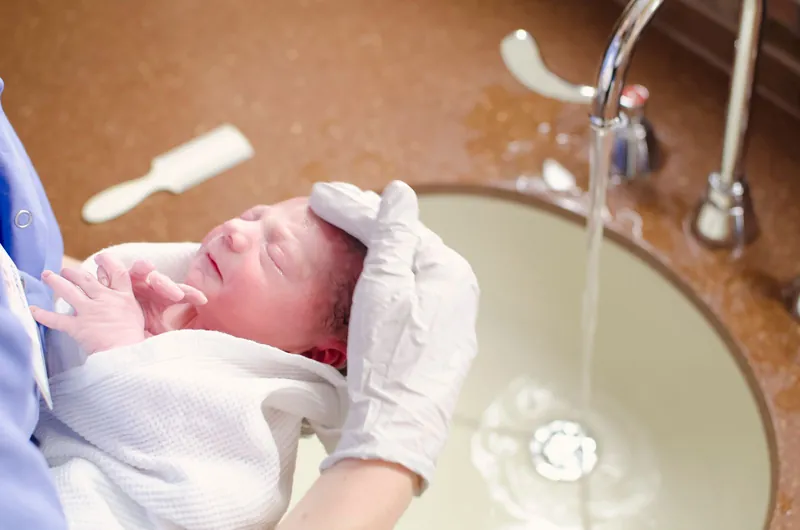
“Don’t bathe the baby for a week” has become a popular line on social media, sometimes presented as an ancient wisdom and sometimes as a modern evidence-based practice. Families ask postpartum doulas what to do, and the answer depends on which claim is being made. Delaying the first bath by 24 hours is endorsed by the World Health Organization and the American Academy of Pediatrics. Delaying it for days or weeks is a different matter. This article separates what is well supported from what is not, and notes where studies disagree.
Key takeaways
Quick answer: for healthy term newborns, delaying the first bath until at least 24 hours after birth is a recognized recommendation, with a fallback of at least 6 hours when a full day is not possible for cultural reasons. Evidence that the delay improves breastfeeding is mixed, evidence for benefits to temperature and blood sugar is observational, and there is little evidence either way about delays beyond 24 hours.
- The WHO’s 2013 postnatal care guidance says bathing should be delayed until 24 hours after birth, or at least 6 hours if that is not possible for cultural reasons. The AAP’s parent guidance repeats it.
- A provincial children’s hospital study of 1,225 newborns found that bathing after 24 hours was associated with higher odds of exclusive breastfeeding at discharge and with less hypothermia and hypoglycemia. A California hospital project that delayed the bath found no significant change in exclusive breastfeeding at discharge.
- A small study of 75 newborns found no clinically meaningful difference in temperature after a sponge bath at 3, 6 or 9 hours of age when babies went into skin-to-skin care afterward.
- A 2026 review concluded that delaying bathing up to 24 hours is evidence-based and safe for healthy term infants, and that data on delays beyond 24 hours remain limited.

What the research says
The recommendation. The 2013 WHO guidelines on postnatal care of mothers and newborns, summarized in a highlights brief hosted by WHO, state under “other postnatal care for the newborn” that bathing should be delayed until 24 hours after birth, and for at least 6 hours if that is not possible for cultural reasons. The same recommendation advises appropriate clothing for the ambient temperature, one to two layers more than adults wear plus hats or caps, and that mother and baby should not be separated. (For sleep, the AAP gives different advice, only one more layer than an adult and no indoor hat once home, covered in Safe Sleep Recommendations: What Every Postpartum Doula Must Know.) The guidance was written for postnatal care in resource-limited settings, and WHO has since published a newer consolidated postnatal guideline that was not read in full for this article, so readers should check it for any change. The AAP’s page on bathing a newborn says the first bath should be delayed 24 hours (or at least 6 hours) and gives its reasoning: babies bathed right away may be more likely to become cold and develop low blood sugar, early bathing can interrupt skin-to-skin contact and early breastfeeding, and vernix acts as a natural moisturizer that the AAP says is best left on for a while. The AAP page notes that babies of mothers with HIV or hepatitis viruses are still bathed after the first breastfeed to reduce risk to others. After going home, it says newborns do not need a bath every day, that three baths a week may be enough, and that only sponge baths should be given until the umbilical cord stump falls off, usually by about one or two weeks.
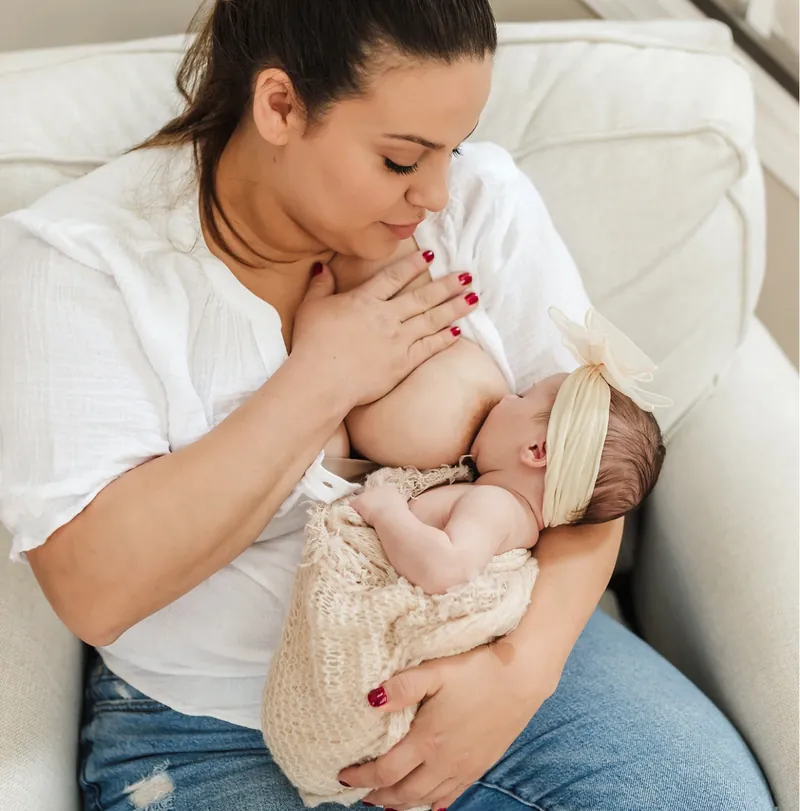
Breastfeeding, temperature and blood sugar. Evidence for the claimed benefits comes mostly from before-and-after hospital studies, and the results are not uniform. Warren and colleagues (2020) compared 680 newborns bathed before 24 hours with 545 bathed after 24 hours at a provincial children’s hospital. After adjustment, the odds of exclusive breastfeeding at discharge were 33% higher in the later-bath group (adjusted odds ratio 1.334, 95% confidence interval 1.049 to 1.698), and hypothermia and hypoglycemia were less frequent, though breastfeeding initiation did not differ. Turney and colleagues (2019) evaluated a practice change at a California community hospital. Time to first bath rose from 6.88 to 13.71 hours, yet exclusive breastfeeding at discharge did not change significantly, and the authors called for more research. Both designs compare groups before and after a policy, so other changes over time could explain differences. The AAP page itself cites a study with a 166% increase in hospital breastfeeding success after a 12-hour delay, which sits alongside the null California result.
On temperature, Kelly and colleagues (2018) sponge bathed 75 healthy term newborns at 3, 6 or 9 hours of age and placed them skin to skin for at least an hour afterward. Temperatures dipped and then recovered in every group. There was a statistically significant difference in axillary temperature between the 3- and 9-hour groups of 0.10 degrees Celsius, which the authors judged not clinically significant. That suggests that how the bath is done and what follows (warmth, skin-to-skin contact) may matter at least as much as the exact hour, but it was a small quasi-experimental study in one hospital, and mothers chose the bath time.
Delays beyond 24 hours. A 2026 narrative review in Pediatric Dermatology by Mardmomen and Foy notes that influencers promote delays from 24 hours to several weeks, while WHO endorses at least 24 hours and longer delays are largely anecdotal. It concludes that in healthy term infants a delay up to 24 hours preserves vernix, improves skin hydration, and is associated with higher exclusive breastfeeding, better thermoregulation and reduced hypoglycemia. It reports that bathing causes transient increases in transepidermal water loss without lasting disruption, that no evidence links delayed bathing to staphylococcal scalded skin syndrome, bullous impetigo or neonatal sepsis, and that infection risk is more strongly tied to prematurity, maternal colonization and NICU exposures. Its conclusion is that data on delays beyond 24 hours remain limited. In other words, no source reviewed here shows harm from a longer delay, and none shows benefit.
What this means for doulas
- Know the bottom line. A first bath at least 24 hours after birth, when feasible, is within WHO and AAP guidance for healthy term babies. Whether and when to bathe after that is a family decision.
- Do not oversell. The effect on breastfeeding is uncertain. Avoid telling parents that delaying the bath will improve milk supply or latch.
- Keep it practical. After a hospital stay the first bath may already have happened. Help parents plan a gentle, warm sponge bath, with the baby wrapped and uncovered only where being washed, as the AAP page describes.
- Respect cultural and personal practice. WHO’s fallback of at least 6 hours acknowledges cultural reasons, so there is room for different family traditions within the guidance.
- Stay in scope. Questions about cord stump appearance, rashes, jaundice color or skin infection belong with the pediatric provider.
Putting the evidence into practice
- Ask about the hospital’s practice. In a prenatal visit, a doula can encourage parents to ask whether the first bath will be delayed and who will give it.
- Offer a sponge-bath routine. Gather supplies first, keep the baby warm, wash the face first and the diaper area last, and never leave the baby unattended on a raised surface, following the AAP’s tips.
- Time baths around feeding and rest. There is no research-based ideal time of day, so pick a time when the baby is calm and the room is warm.
- Keep frequency modest. The AAP says three baths a week may be enough in the first year, so parents who prefer bathing less often are not neglecting the baby.
- Refer. Skin that looks infected, a cord stump with redness, discharge or bleeding, a baby who is cold or hard to wake after a bath, or any concern about the baby’s health should go to the pediatric provider.
Limits and uncertainty
The delayed-bath studies are mostly pre/post hospital projects and small quasi-experiments, not randomized trials, and they were done in single hospitals, mostly in North America, in healthy term or late preterm babies. Findings on breastfeeding conflict, and the temperature study found no clinically relevant difference between 3, 6 and 9 hours. The WHO recommendation reviewed here is the 2013 version as summarized by a WHO-hosted brief, and a newer consolidated WHO guideline exists that was not read in full text. The 2026 review is narrative, not systematic, and this article draws only on its abstract. Evidence on delays beyond 24 hours is limited, so neither harm nor benefit has been shown. Babies who are preterm, sick or have a skin condition may need different advice from their care team.
The bottom line
Waiting at least 24 hours before the first bath is supported by WHO and AAP guidance for healthy term newborns, with plausible reasons and modest, mixed evidence behind it. Beyond that, parents are free to choose, and a doula’s role is to explain the evidence honestly, support warm, gentle bathing, and leave any medical question to the baby’s clinicians.
Birth & Baby University’s For Doulas page outlines its postpartum doula training, recertification and mentorship for doulas who support families through the newborn weeks. Check that any program meets your certifier’s, employer’s or state’s requirements before you enroll.
This article is for professional education. It is not medical, legal or tax advice. Check the standards of your certifying organization and the rules where you work. For concerns about a baby’s health, contact a pediatric provider or emergency services.
Sources and further reading
- Maternal and Child Survival Program. Postnatal Care for Mothers and Newborns: Highlights from the World Health Organization 2013 Guidelines (April 2015, hosted by WHO). Read the source
- American Academy of Pediatrics. Bathing Your Baby (HealthyChildren.org). Read the source (read October 2026)
- Warren S, et al. Effects of delayed newborn bathing on breastfeeding, hypothermia, and hypoglycemia. Journal of Obstetric, Gynecologic & Neonatal Nursing (2020). Read the source
- Turney J, et al. Delayed newborn first bath and exclusive breastfeeding rates. Nursing for Women’s Health (2019). Read the source
- Kelly PA, et al. Effect of timing of the first bath on a healthy newborn’s temperature. Journal of Obstetric, Gynecologic & Neonatal Nursing (2018). Read the source
- Mardmomen N, Foy V. Delayed newborn bathing: exploring social media trends, cultural perspectives, and dermatologic implications. Pediatric Dermatology (2026). Read the source
More for professionals: the Professionals Blog.



Leave a Reply