

By Birth & Baby University · Last updated: October 2026 · 7 min read
Community-based doula programs have become a visible part of the conversation about access to perinatal support. They are built on a simple idea: pair families with a nonclinical support person who often comes from the same community, and who offers continuity before, during and after birth. The idea is easy to like. What the research can say about whether such programs improve access, and what makes them work in practice, is more limited than the enthusiasm suggests. This article reviews what is known, where the evidence is weak, and what the role asks of the doula.
Key takeaways
Quick answer: community-based doulas are nonclinical perinatal support providers who are often from the communities they serve. Systematic reviews of doula care suggest some benefits, mainly around birth experience, postpartum visit attendance, anxiety and breastfeeding initiation, but much of the evidence is rated high risk of bias and few studies isolate the community-based model. Program evaluations show that implementation depends on funding, trust with clinicians and support for doulas themselves.
- A 2026 systematic review of U.S. studies found moderate-certainty evidence that doula support is likely associated with lower rates of preterm birth and cesarean delivery, better birth experiences and greater postpartum visit attendance, and low-certainty evidence for other outcomes.
- A 2026 review of clinical and pilot trials found the most consistent findings for maternal anxiety, postpartum follow-up and breastfeeding initiation, and more variable findings for cesarean delivery and pain management.
- Descriptive evaluations of community-based programs show large service volumes but cannot show that outcomes were caused by the program.
- Implementation research points to trust, funding and sustainability as common barriers.
What a community-based doula program is
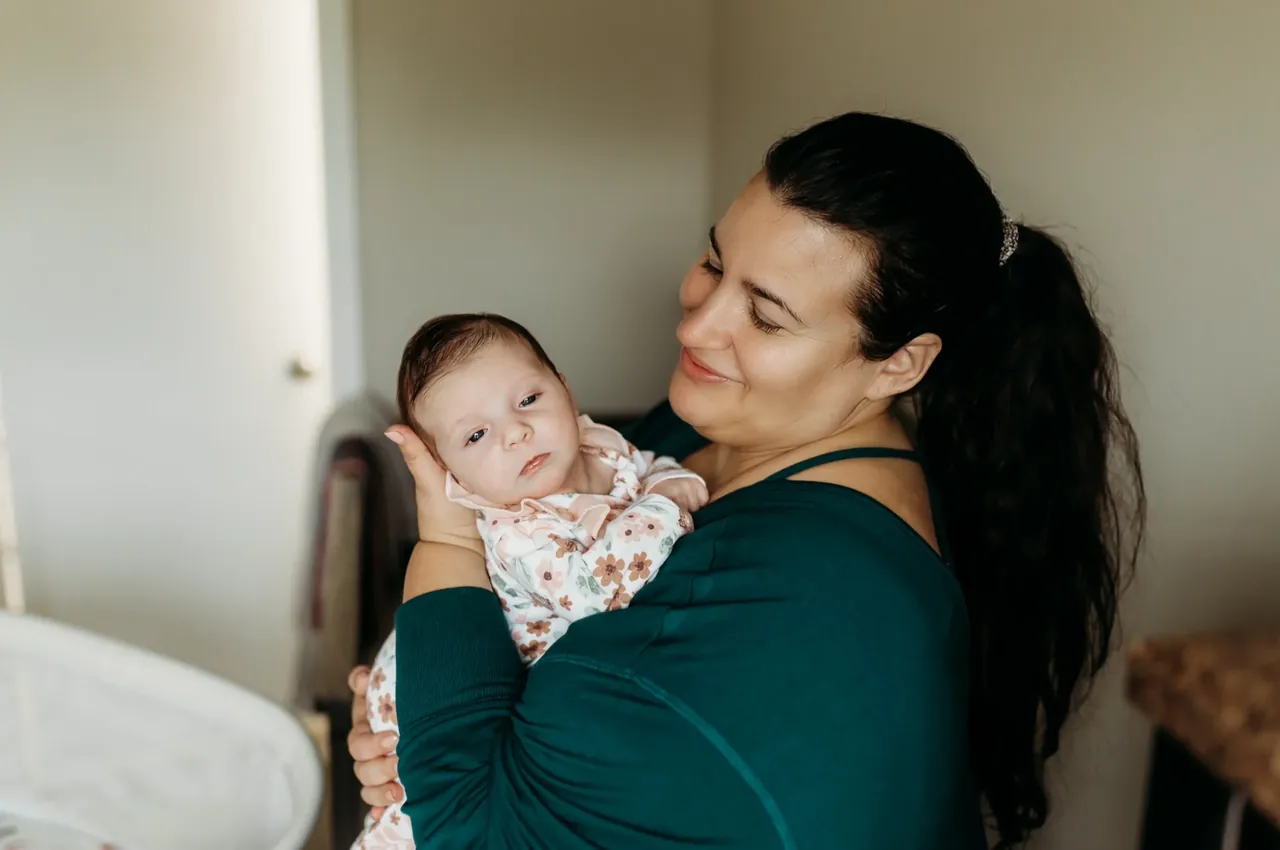
Riley and colleagues (2025) describe community-based doulas as providing nonclinical perinatal support and often coming from the same communities as the families they serve. Programs vary in who they enroll, how doulas are paid and trained, and how many visits are offered. The Groves systematic review of trials (2026) notes heterogeneity in the scope, intensity and training of doula interventions, which makes it hard to say that results from one program apply to another.
What systematic reviews say about doula support
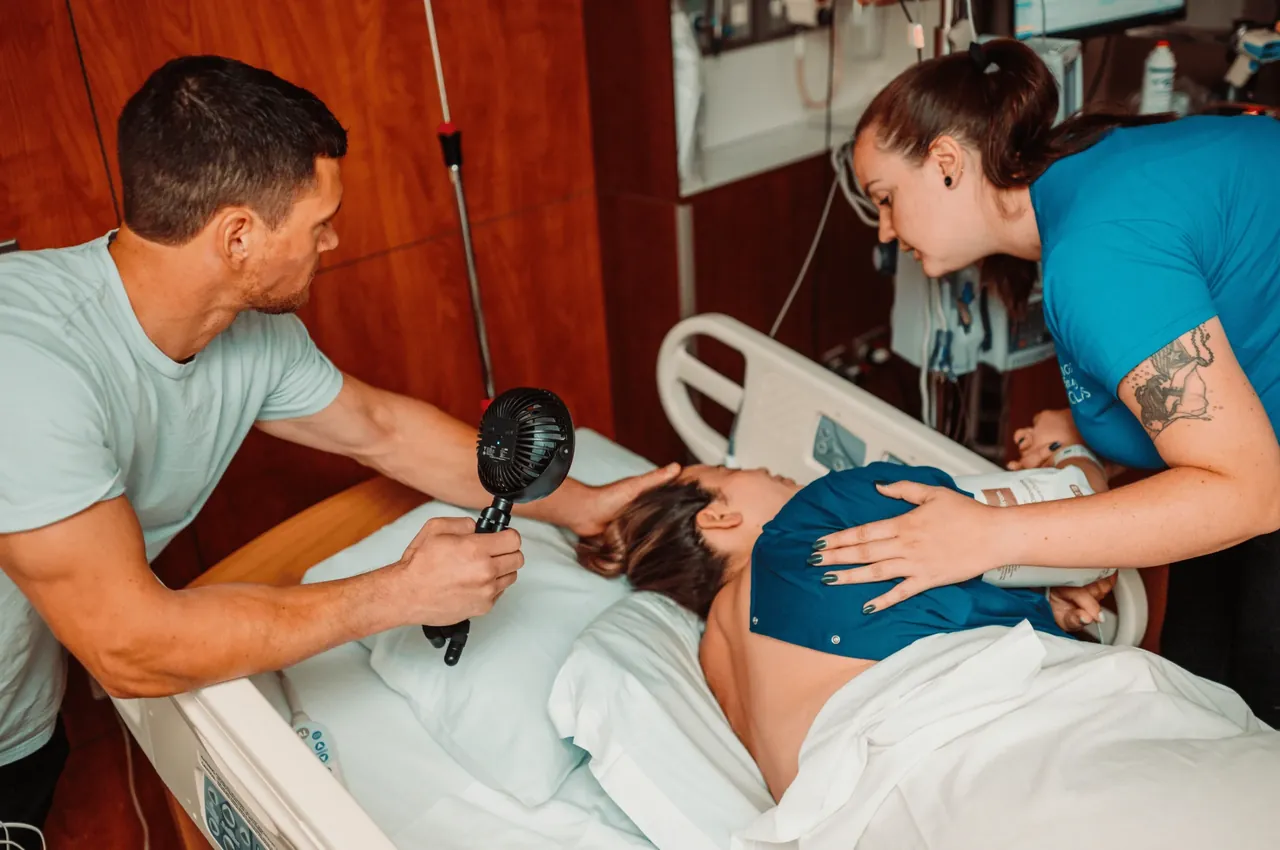
Viswanathan and colleagues (2026) reviewed U.S. randomized and nonrandomized studies (12 randomized trials and 18 nonrandomized studies). Doula support was likely associated with lower rates of preterm birth and cesarean delivery, improved birth experiences and increased postpartum visit attendance (moderate certainty). It may be associated with several other improvements, such as prenatal mood, breastfeeding initiation and respectful care (low certainty), and may not be associated with reduced rates of hypertensive disorders of pregnancy, maternal readmissions or neonatal intensive care admissions (low certainty). Of the studies composed entirely of people at risk of disparities, four of five reported at least some benefit. The authors rated 19 of the 30 studies high risk of bias, found considerable heterogeneity, and said there was insufficient information on the effects of different types or intensity of doula support.
Groves and colleagues (2026) reviewed 22 articles describing 21 interventions, mostly randomized trials. Findings were most consistent for improved maternal anxiety, postpartum follow-up and breastfeeding initiation, while evidence for cesarean delivery and pain management was more variable. The review noted gaps: underrepresentation of marginalized populations, limited reporting of fidelity and implementation, and failure to account for crossover in control groups. It concluded that doula care may improve perinatal anxiety, health care utilization and breastfeeding initiation, though evidence for other outcomes was inconsistent.
Taken together, the two reviews agree on some outcomes, including postpartum follow-up, and differ on others, such as cesarean delivery, where one found moderate-certainty evidence of an association with fewer cesareans and the other found variable results. Neither abstract reports results separately for community-based doulas.
What community-based program evaluations show
The Washington State evaluation (Riley and colleagues, 2025) analyzed programmatic data on more than 1,800 families enrolled from 2016 to 2022, most of whom identified as Asian, Black, Indigenous, Latina or multiracial. Doulas made 14,672 home visits totaling 17,774 hours. Preterm birth ranged from 4 percent to 9 percent across programs and more than 94 percent of participants were breastfeeding or chestfeeding at birth. Doulas described holistic, culturally matched services and organizational support for doulas as facilitators, and barriers included lack of community resources, power asymmetries in birth settings and provider burnout. The authors conclude the findings document positive impact and support calls for better compensation. However, the design had no comparison group, so these figures describe what the program delivered and what its participants experienced, not what would have happened without it.
Quinn and colleagues (2025) interviewed 19 clinicians and nurses and held focus groups with 11 doulas about implementing a community-based doula program for Black patients at one academic hospital in Milwaukee. They identified four barriers: doulas’ advocacy was met with resistance, trust and relationships between doulas and clinicians were lacking, a hierarchy of knowledge diminished the value of doulas’ expertise, and system-level barriers prevented sustained integration. They conclude significant investment and resources are needed. This is one hospital, and it describes perceptions, not outcomes.
What this means for doulas
- The role is support, not treatment. Community connection is an asset, but it does not change scope. Doulas do not diagnose, give medical advice or make care decisions.
- Relationships with clinicians are part of the job. If trust and role clarity are common barriers, introduce yourself and your role, learn the unit’s practices, and agree how you will communicate. Our article on doulas and labor nurses covers this in more detail.
- Plan for the whole arc. Some programs offer prenatal, labor and postpartum contact, and postpartum follow-up is among the outcomes that both reviews above most consistently associate with doula support.
- Look after yourself. The Washington evaluation names burnout and the need for support for doulas. Mentorship, peer groups and fair pay are part of sustaining the work.
- Be honest about the evidence. Tell prospective clients and partners what research suggests and what it does not, rather than promising specific outcomes.
Putting it into practice
- If you join a community-based program, ask how doulas are paid, trained and supported, how many visits clients receive, and how referrals to clinical care work.
- Learn the local hospital and clinic pathways for introducing doulas, including any credentialing or badge requirements.
- Keep a current list of community resources and referral contacts, and record when you last confirmed each one.
- Arrange regular peer support or supervision, since the role involves emotional labor. Our article on compassion fatigue versus burnout may help.
- Track basic program information, such as visits offered and completed, in a way that protects client privacy.
Limits and uncertainty
The reviews cited summarize studies that are mostly small, vary in design and have a high risk of bias, and the program-level evidence is descriptive. Evidence for community-based doula programs specifically is thinner than evidence for doula support in general. The research also does not tell us which program features matter most. Findings may not carry over to every state, payer or population.
The bottom line
Community-based doula programs are a promising way to offer culturally connected perinatal support, and doula support in general is associated with some better experiences and outcomes. But the evidence is uneven, and implementation depends on trust, funding and support for the doulas who do the work. Doulas who understand both the promise and the limits are better placed to serve families and to sustain their own practice.
Birth & Baby University’s For Doulas page outlines its online, self-paced birth and postpartum doula training, recertification and mentorship, which can support doulas who want to work in community settings.
This article is for professional education. It is not medical, legal, financial or tax advice. Check the standards of your certifying organization and the rules where you work.
Sources and further reading
- Viswanathan M, Middleton JC, Sathe NA, et al. Doula support during pregnancy, childbirth, and postpartum: a systematic review and meta-analysis. Obstetrics & Gynecology (2026). Read the source
- Groves P, Williams H, Salter CL, et al. Doula care and health outcomes: a systematic review. JAMA Network Open (2026). Read the source
- Riley T, Buchanan ZV, Perera D, et al. Evaluating the implementation and outcomes of a community-based doula program in Washington State: a mixed-methods analysis. Perspectives on Sexual and Reproductive Health (2025). Read the source
- Quinn KG, Marion E, Williams JS, Blackwell D, Olson J, Palatnik A. Implementation barriers to incorporating a community-based doula program to improve birth outcomes for Black patients in an academic medical center. Journal of Racial and Ethnic Health Disparities (2025). Read the source
More for professionals: the Professionals Blog.



Leave a Reply