

By Birth & Baby University · Last updated: October 2026 · 5 min read
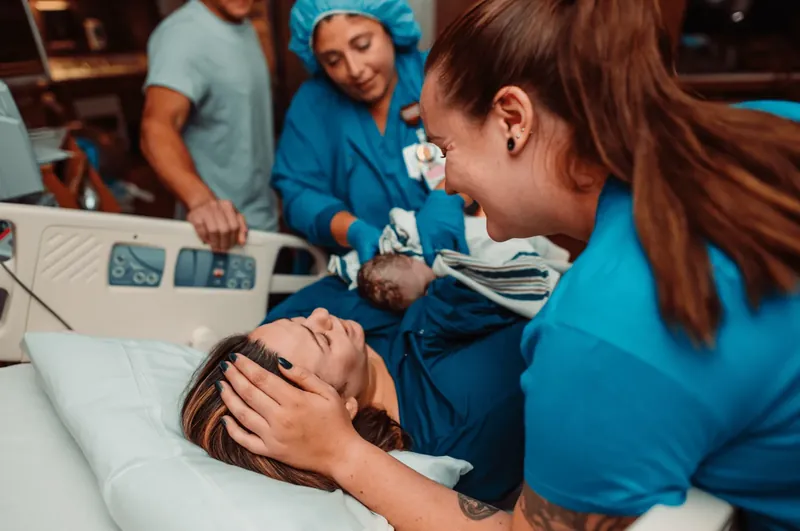
A doula and a labor nurse are often in the same room for the most important hours of a family’s story, and the two roles are easy to confuse or to set against each other. They do not have to be. This article looks at what the professional documents say about how doulas and nurses fit together, and offers practical, scope-safe ways to make the working relationship smoother for the family at the center of it.
Key takeaways
Quick answer: professional guidance describes doula support as an addition to nursing care, not a replacement for it. Doulas provide non-medical emotional, physical and informational support, nurses provide clinical care, and good collaboration depends on each side being clear about which is which.
- ACOG places doula support alongside nursing care, not instead of it.
- DONA International’s standards say its birth doulas do not perform clinical or medical tasks and do not diagnose or treat.
- AWHONN lists a labor-support statement revised in January 2026.
- Collaboration is mostly small, repeated courtesies: introductions, clarity about role, and staying out of clinical decisions.
Two roles, two kinds of care
DONA’s birth-doula standards describe nonclinical support and client-led decisions. A doula acting in this role does not diagnose, treat or carry out clinical tasks. Any separately qualified service needs a clear distinction from doula support.
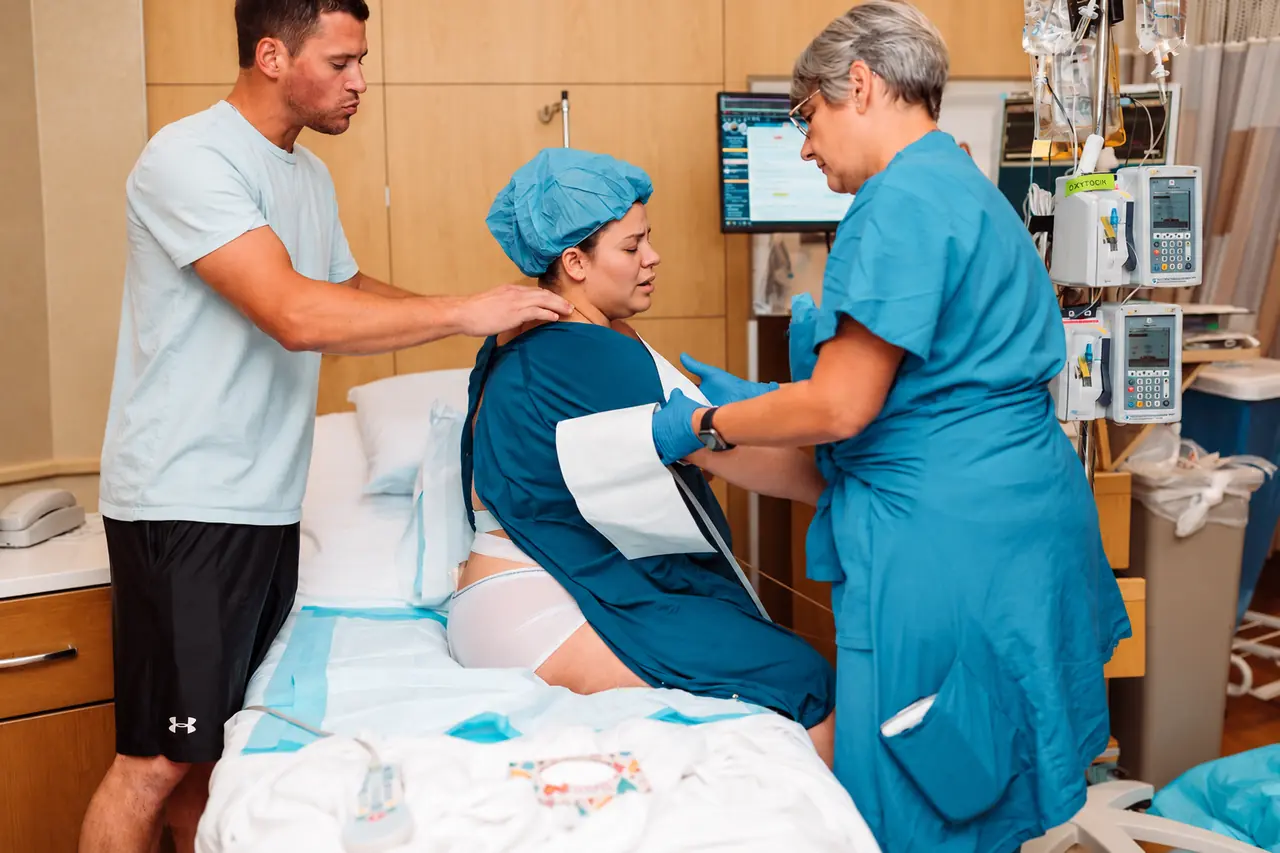
ACOG’s 2019 opinion supports collaborative care and describes doula support as additional to nursing care. These are complementary roles; clinical assessment remains with the qualified care team.
What the nursing organizations say
AWHONN lists a labor-support statement revised in January 2026. The older 2018 statement and DONA’s response belong to that earlier discussion. This article does not attribute a current team-coordinator rule to AWHONN. Its practical collaboration suggestions below are BBU suggestions grounded in the distinction between clinical care and nonclinical support.
Where friction usually comes from
The documents above are clear. The friction in real rooms usually comes from something simpler: an unfamiliar person in a high-stakes space, unclear expectations, and tired people on both sides. The most common friction points, from the doula’s side, tend to be:
- Role confusion. A comment that sounds like advice ("you don’t have to do that") is heard as a clinical contradiction.
- Surprise. The nurse learns about the doula’s presence, or about a birth preference, in the middle of a shift change.
- Space and timing. The doula is standing where the nurse needs to be, or asking for something while an assessment is underway.
- Unclear speaking channels. The doula relays questions in ways that make the client’s own voice disappear, or the nurse speaks only to the doula.
Practical habits that help
These are practice suggestions, not rules from the documents cited above. Adapt them to your setting and your certifying organization’s standards.
- Introduce yourself early and briefly. Your name, your role in one sentence, and that you are there for the family. For example: "I’m the doula for this family. I’m here for emotional and physical support and I won’t be doing anything clinical."
- Let the family’s preferences travel in the family’s voice. Encourage the client to share their preferences with the nurse directly, and be ready to help them find the words if they ask. The DONA standards describe fostering client autonomy and amplifying the client’s voice within the broader care team.
- Ask, do not assume, about space and timing. "Is this a good moment to adjust the pillow, or should I wait?" costs two seconds.
- Keep clinical questions as the client’s questions. If a family member asks you what a reading means, say that the nurse is the right person to explain it, and offer to help them ask.
- Say thank you. A short, specific thank you to the nurse at the end of a shift builds more goodwill than any amount of advocacy.
When something goes wrong
Sometimes a family is not being heard, or something that concerns you is happening. The DONA standards describe advocacy that includes speaking up, clearly and respectfully, when it is in the client’s best interests and when it is safe to do so, and they ask doulas to center the client’s experience and help them understand how to report mistreatment through appropriate channels. Within that frame, the most professional first move is usually the quietest: a question to the client, a pause, and then a suggestion that they raise it with the nurse or charge nurse. Your standards, your contract and your own judgment will define the rest.
The bottom line
The professional literature is consistent that doula support sits beside nursing care. Doulas who understand that boundary clearly, say it kindly and keep the family at the center are the ones nurses remember, and the ones families thank.
This article is for professional education. It is not medical, legal or tax advice. Check the standards of your certifying organization and the rules where you work.
Sources and further reading
- American College of Obstetricians and Gynecologists. Committee Opinion No. 766: Approaches to Limit Intervention During Labor and Birth. Obstetrics & Gynecology 2019;133:e164 to e173. Read the source
- DONA International. Birth Doula: Standards of Practice (last revised September 2025). Read the source
- Association of Women’s Health, Obstetric and Neonatal Nurses. AWHONN position statements index (labor-support statement current revision January 2026). Read the source
- Association of Women’s Health, Obstetric and Neonatal Nurses. Continuous Labor Support Position Statement (2026). PubMed record. Read the source
- DONA International. Examining AWHONN’s Position Statement on L&D Nurses as Continuous Support (historical commentary on the 2018 statement). Read the source
More for professionals: the Professionals Blog.



Leave a Reply