By Birth & Baby University · Last updated: October 2026 · 8 min read
“Certified birth doula” sounds like a single, settled credential. In practice it is a family of credentials issued by different organizations, with different requirements, and in the United States no law requires any of them in order to practice. Preparing well means understanding what a certification does and does not tell a family, an employer or a state Medicaid program, and then choosing a path that fits where you plan to work.
Key takeaways
Quick answer: becoming a certified birth doula usually means completing a training, attending a set number of births as the primary doula, collecting evaluations, and agreeing to a scope of practice and code of ethics. The details differ by certifying organization, and what counts as “certified” for payment can differ again by state.
- A 2023 National Health Law Program (NHeLP) review stated that there are no mandatory licensure, certification or credentialing requirements for doulas to practice in the United States. That describes the general picture, and individual states and payers can add their own rules.
- The two organizations compared here, DONA International and CAPPA, each require training, experience as the primary doula at three births, evaluations and a signed scope of practice. Hours, fees, exams and timelines differ.
- The research on continuous labor support is about support, not about any one credential. The reviews cited below do not compare certifying organizations with each other.
- If you want to work with Medicaid clients, check your state’s list of accepted trainings before you pay for one.

Certification is a professional credential, not a license
A license is granted by a government and is required to practice. A doula certification is granted by a private organization, an association or a state program, and is usually voluntary. The NHeLP summary of state training and certification approaches (published March 2023) puts it plainly: there are currently no mandatory licensure, certification or credentialing requirements for doulas to practice in the United States. What states do regulate is who can be paid by Medicaid, and there the picture varies. NHeLP described eight jurisdictions that required completion of an approved training or certification, two that accepted core-competency training from any provider, and Florida leaving credentialing to individual managed care plans. Those counts were accurate when published and have likely changed since, so treat them as a snapshot.
The Network for Public Health Law’s 50-state survey of doula laws (laws enacted or adopted as of March 2023) shows how uneven this is. Some states define a doula in statute or rule, some create their own certification, and Arizona, for example, allows a doula to practice without being state certified while also offering an optional state certificate with its own training and birth-experience requirements.

What two major certifying organizations ask for
The lists below were read from each organization’s own pages in October 2026. Requirements, fees and time limits change, so confirm them before you enroll.
DONA International birth doula certification.
- A DONA-approved birth doula workshop of 16 to 24 hours, plus lactation support education (a minimum 3-hour class, unless you already hold a qualifying lactation credential) and childbirth education (observing an in-person series of 8 hours or more, unless you take the intro class with your workshop).
- Continuous in-person labor support at three births with three different clients, totaling at least 15 hours of labor support, with parent evaluations and a self-reflection for each birth. DONA’s FAQ states that prenatal and postpartum visits do not count toward those hours and that a doula buddy or observed birth cannot be submitted.
- Required reading, a community resource and referral list, and signed Scope of Practice and Code of Ethics agreements.
- Submission within three years of finishing the workshop, with membership required at the time you submit. DONA’s FAQ describes workshop fees from independent trainers as typically ranging from $400 to $700.
CAPPA Certified Labor Doula.
- An 18-hour, two-day training delivered live in person or online, with CAPPA membership as a prerequisite and a minimum age of 18.
- At least three births as a doula, three parent evaluations and six healthcare provider evaluations.
- A scope of practice pretest (CAPPA lists 100 percent as the passing grade), a multiple-choice exam (85 percent or higher) and an essay exam, plus required reading and a local resource list.
- A time limit to finish the requirements. CAPPA’s page states two years in its requirements list and one year in its summary box, so confirm the current limit with CAPPA. It lists the all-inclusive training and certification program at $1,200 and recertification ($125) every three years.
Both organizations ask you to demonstrate more than knowledge. They ask you to show that you can do the work with real families and that you understand its boundaries. That is a useful way to think about preparation in general: knowledge, supervised practice, feedback from others, and clarity about scope.
What the research says, and what it does not
The main reason families, hospitals and payers take doulas seriously is the research on continuous labor support. The Cochrane review by Bohren and colleagues (2017) included 27 trials, with 26 trials involving 15,858 women contributing data. Women who had continuous support were more likely to have a spontaneous vaginal birth (average RR 1.08), less likely to have a cesarean birth (average RR 0.75), less likely to report negative feelings about their birth experience (average RR 0.69), and their labors were on average about 0.69 hours shorter. The review found no evidence of harm. It also reported that the effect on cesarean birth was largest when the supporter was in a doula role and where epidural analgesia was not routinely available.
Three limits matter for how you describe this work:
- The authors rated much of the evidence as low quality because no study blinded women or care staff, and effects varied between trials.
- A more recent meta-analysis in Obstetrics & Gynecology (Dias and colleagues, 2025) found lower cesarean rates with intrapartum doula support in randomized trials (pooled RR 0.71), but also substantial heterogeneity and signs of possible publication bias, and the pooled estimate for the four U.S. trials did not reach statistical significance (RR 0.71, 95% CI 0.47 to 1.06).
- These studies tested support given by a person present for the purpose of support. They did not test whether holding one organization’s certificate produces better outcomes.
So a balanced way to say it is that continuous support is associated with better experiences and several improved outcomes, that the certainty of that evidence is limited, and that how well a particular doula supports a particular family depends on far more than a certificate.
What certification expects of your scope
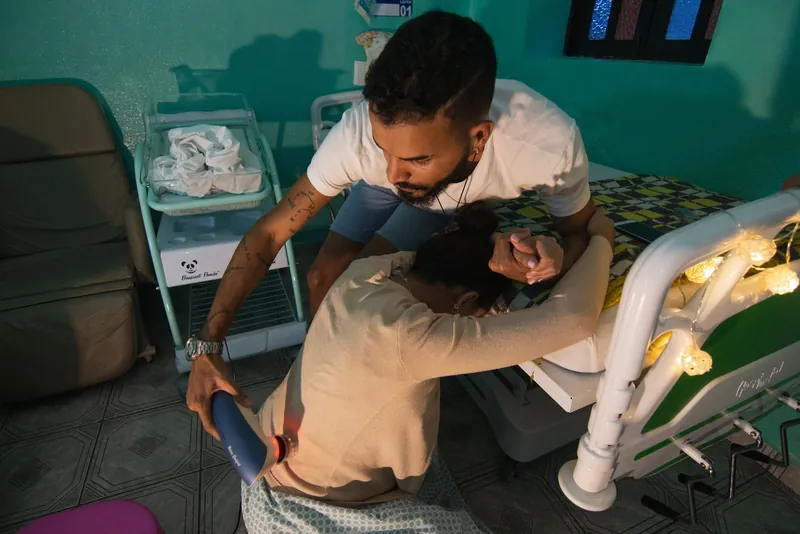
DONA’s Birth Doula Standards of Practice (last revised September 2025) describe the role as emotional, physical and informational support and advocacy. The standards state that the support is non-medical, that the doula does not perform clinical tasks and will not diagnose or treat in any modality, and that referrals are made for needs beyond the doula’s training. Whatever certification you choose, expect a similar boundary. It is the foundation of working alongside nurses, midwives and physicians, and it protects your clients.
Check what your state and payers accept
If you plan to accept Medicaid, your certificate may not be what the payer asks for. The Illinois Medicaid-Certified Doula Program, run by the SIU School of Medicine with the state’s Department of Healthcare and Family Services, is a good example. Its program page says it is not a doula training program, that applicants complete training through pre-approved training organizations first, and that there are two pathways, one for recently trained doulas and a legacy pathway for experienced doulas. Other states publish their own lists of approved organizations or core competencies. The practical lesson is to read your state agency’s current page before you choose a program, not after.
Putting it into practice: a preparation sequence
- Decide where you want to work. Private clients, a hospital-based program, a community organization, an agency or Medicaid enrollment may each ask for different things.
- Look up the rules that apply there. Check your state’s Medicaid agency, any state certification, and the requirements of any employer or agency you hope to join.
- Compare certifying organizations item by item. Training hours, number of births, evaluations, exams, time limit, total cost and renewal requirements.
- Plan how you will reach your first births. Slow starts are common. DONA’s own FAQ says not to be discouraged if business starts slowly, and suggests networking with other perinatal professionals to introduce your services. If you consider offering reduced-fee support to gain experience, check your certifier’s rules first, including how births are documented and whether evaluations and releases are needed.
- Build skills the checklist cannot measure. Communication, cultural humility, trauma-informed practice, working respectfully with clinical staff, and knowing when something is outside your scope.
- Keep your records. Evaluations, signed releases and hours logs are what certifying bodies and state programs ask to see.
When this guidance may not apply
Requirements described here are for United States organizations and settings. Outside the U.S., or in a state with its own program, the steps may differ. This article describes publicly stated requirements and does not endorse or rank any certifying organization.
The bottom line
Becoming a certified birth doula is less about collecting a single title than about showing, to the organization that certifies you and to the families and payers that rely on it, that you have trained, practiced under real conditions, understood your boundaries and committed to a code of ethics. Choose the path that matches where you intend to work, verify the current rules from the source, and be honest with clients about what the research does and does not show.
If you are comparing options, Birth & Baby University’s For Doulas page brings together its birth and postpartum doula training, recertification and mentorship in one place, along with the professional blog. As with any program, confirm that it meets the requirements of your certifier, employer or state before you enroll.
This article is for professional education. It is not medical, legal or tax advice. Check the standards of your certifying organization and the rules where you work.
Sources and further reading
- Bohren MA, Hofmeyr GJ, Sakala C, Fukuzawa RK, Cuthbert A. Continuous support for women during childbirth. Cochrane Database of Systematic Reviews (2017). Read the source
- Dias Y, et al. Intrapartum doula support and cesarean delivery rates: a systematic review and meta-analysis. Obstetrics & Gynecology (2025). Read the source
- DONA International. Birth Doula Certification, and FAQs for Aspiring DONA Doulas. Birth doula certification · FAQs (read October 2026)
- CAPPA. Labor Doula Certification (CLD). Read the source (read October 2026)
- DONA International. Birth Doula: Standards of Practice (revised September 2025). Read the source
- National Health Law Program. Doula Medicaid Training and Certification Requirements (March 2023). Read the source
- Network for Public Health Law. 50-State Survey: State Laws Addressing Doula Scope of Practice (October 2024; laws as of March 2023). Read the source
- SIU School of Medicine. Illinois Medicaid-Certified Doula Program. Read the source
More for professionals: the Professionals Blog.



Leave a Reply