By Birth & Baby University · Last updated: October 2026 · 7 min read
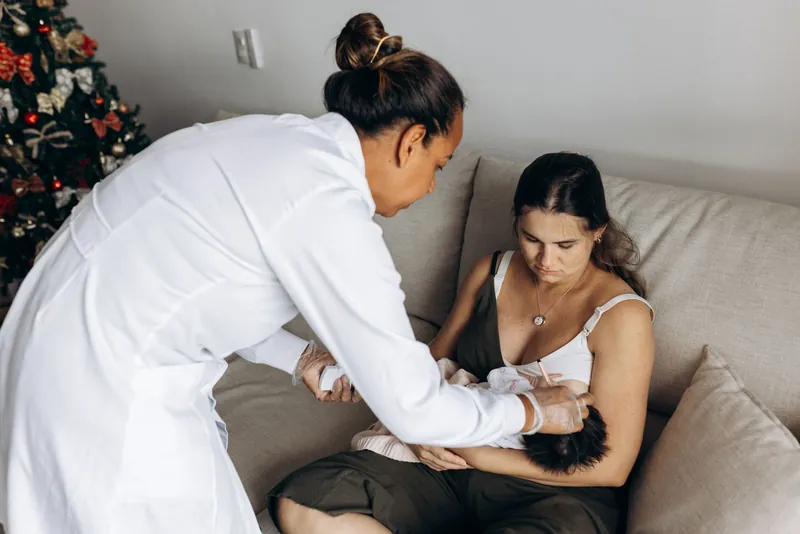
Postpartum doulas work in the part of the perinatal journey that has the least formal structure: the weeks at home after birth. Families often have a hospital team during pregnancy and birth, then a short clinical visit, then a long stretch of ordinary days where they are mostly on their own. Certification as a postpartum doula is one way to show that you are prepared for that stretch, and also that you know where your role ends.
Key takeaways
Quick answer: certification as a postpartum doula generally combines a training of 18 hours or more, hands-on work with three families, evaluations from those families, and a signed scope of practice and code of ethics. Organizations differ on hours, timelines, CPR, exams and fees.
- DONA International requires a DONA-approved workshop of 27 or more hours, and service to at least three families within 12 weeks of birth, with a minimum of 12 hours and 3 visits per family (36 hours across three families).
- CAPPA requires an 18-hour training and work with three families within the first four months after birth, with in-person or virtual support options, infant and child CPR with in-person manikin practice, two letters of recommendation and exams.
- Both organizations describe the role as non-medical. DONA’s standards say postpartum doulas do not perform clinical or medical tasks and will not diagnose or treat.
- The research base for postpartum doula care specifically is thinner than the research on continuous support in labor. A good article, and a good doula, says so.

What postpartum doulas actually do
DONA’s Postpartum Doula Standards of Practice (last revised September 2025) describe non-medical support for the postpartum transition, primarily in the client’s home. That can include support for physical recovery, emotional transition, sleep, nutrition, household organization and family adjustment, and help with newborn care, feeding, sleep and sibling adjustment. The standards describe the NEAR principles: nurture, educate, assess and advocate, and refer. “Assess” here means noticing a family’s changing needs, not clinical assessment, which the same standards exclude.
CAPPA’s Certified Postpartum Doula (CPD) page lists a similar set of topics in its 18-hour training, including the professional scope of practice, postpartum recovery and emotional well-being, newborn care and feeding support, recognizing perinatal mood and anxiety disorders, and community resources. The word “recognizing” matters. It means knowing when to encourage a family to talk to a clinician, not diagnosing.
What certification asks of you
The requirements below were read from each organization’s own pages in October 2026. Confirm current details before enrolling.
DONA International postpartum doula certification (requirements page):
- A DONA-approved postpartum doula workshop of 27 or more hours, plus a self-paced equity webinar.
- Postpartum support for at least three families within 12 weeks after birth, with at least 12 hours and 3 visits for each family.
- Experience forms, evaluations from each family and partner (or another observing adult), a community resource and referral list, and signed Scope of Practice and Code of Ethics agreements.
- Submission within three years of the workshop, with DONA membership required at submission. DONA lists estimated total costs for postpartum certification of roughly $1,250 to $1,400, with workshop fees varying by trainer, and renewal every three years.
CAPPA Certified Postpartum Doula:
- An 18-hour live in-person or online training, CAPPA membership as a prerequisite, and enrollment in the course in CAPPA Academy.
- Work with three families within the first four months postpartum, each providing an evaluation. In-person support must total at least 15 hours per family, and virtual support at least 5 hours per family, with CAPPA setting out how many families may be served virtually.
- Current infant and child CPR with in-person manikin practice, two letters of recommendation from qualified professionals, a resource list, a scope of practice pretest, and multiple-choice and essay exams.
- A time limit to finish, which CAPPA’s page states as two years in its requirements list and one year in a summary box. Confirm with CAPPA. It lists the all-inclusive program at $1,200 and recertification ($125) every three years.
Notice what is shared. Both ask you to practice with real families before certification, to gather feedback, to prepare a referral list, and to sign a scope of practice. Differences in hours and CPR requirements can matter if an employer, agency or payer asks for one specifically.
What the research says
For doula support overall, a 2026 systematic review in JAMA Network Open (Groves and colleagues, 2026) examined 22 articles describing 21 trial interventions. Findings were most consistent for lower maternal anxiety, better postpartum follow-up and breastfeeding initiation, while evidence for other outcomes was more variable. Importantly for this topic, the authors noted that few studies addressed the postpartum period specifically.
A 2026 systematic review and meta-analysis in Obstetrics & Gynecology (Viswanathan and colleagues, 2026), which included U.S. studies of doula support in pregnancy, birth and postpartum, concluded that doula support is likely associated with an increased likelihood of postpartum visit attendance (moderate certainty), and may be associated with outcomes such as postpartum adjustment to parenthood and parenting confidence (low certainty). One of the 30 included studies had low risk of bias and 19 had high risk of bias, so the findings should be described as associations, with real limits.
In plain terms, there is promising but incomplete evidence that doula support around the postpartum period helps with some experiences and with connecting families to care. There is not strong evidence tying postpartum doula certification to particular health outcomes, and it is better not to claim otherwise.
How this fits with clinical postpartum care
The American College of Obstetricians and Gynecologists (Committee Opinion 736, Optimizing Postpartum Care, May 2018, reaffirmed 2025) recommends that postpartum care be an ongoing process rather than a single visit, with contact with an obstetric care provider within the first three weeks and a comprehensive postpartum visit no later than 12 weeks after birth. That visit covers mood and emotional well-being, infant care and feeding, sleep and fatigue, physical recovery, contraception, and chronic disease management.
This is the clinical frame a postpartum doula works beside. You can help a family remember appointments, write down questions, and feel permitted to ask them. You do not assess, diagnose or advise on treatment.
When to encourage urgent care
The CDC’s Urgent Maternal Warning Signs (page dated May 2024) list signs including a headache that will not go away, changes in vision, fever of 100.4 degrees Fahrenheit or higher, trouble breathing, chest pain or a fast-beating heart, severe belly pain, vaginal bleeding or discharge after pregnancy, severe swelling, redness or pain in a leg or arm, and thoughts of harming yourself or your baby. The CDC says to seek medical care immediately if these occur. A postpartum doula’s role is to make sure the family knows this list, to say plainly when something sounds like it needs prompt care, to help them contact their provider or emergency services, and to document what you observed and said. It is not to wait and see.
Putting it into practice: preparing for the work
- Choose a certification with your work setting in mind. Agencies, Medicaid programs and hospital-linked programs may each ask for a particular credential, so ask them first.
- Plan your three families early. Both organizations require real client work, within a defined window after birth. Think about how you will find families, what you will charge, and how you will keep clear records.
- Learn local referral resources. Lactation professionals, pelvic health physical therapists, mental health clinicians, pediatric practices, and crisis lines. Your resource list is a required document and also a daily tool.
- Get CPR training that meets the certifier’s rules. CAPPA specifies in-person manikin practice.
- Practice saying your scope out loud. “I can help you think about your questions and find the right person to ask. I can’t tell you whether this is normal for you medically.”
- Check your state. Medicaid programs in some states cover postpartum doula visits for enrolled doulas, and rules for training vary by state, so read your state agency’s current page. A 2023 MACPAC study of five states found that benefits typically included prenatal, labor and postpartum visits, with the number of postpartum visits ranging by state, for example two in Oregon and three in Rhode Island.
When this guidance may not apply
These requirements describe U.S. certifying organizations. Programs outside the U.S., agency-run credentials and state-specific certifications may ask for different things. The evidence reviewed here is mostly about doula support in general, not postpartum-only support, and was often from U.S. studies with varied designs.
The bottom line
A postpartum doula certification is a record that you trained, practiced with real families, got feedback, prepared referrals and agreed to a scope. It is not a clinical qualification, and the best postpartum doulas are the ones who are clear about that and who know exactly who to call.
If you are weighing training options, Birth & Baby University’s For Doulas page shows how its postpartum doula training, birth doula training, recertification and mentorship fit together. Check that any program meets the requirements of your certifier, employer or state before you enroll.
This article is for professional education. It is not medical, legal or tax advice. Check the standards of your certifying organization and the rules where you work.
Sources and further reading
- DONA International. Postpartum Doula Certification, and Certification & Renewal Costs. Certification · Costs (read October 2026)
- DONA International. Postpartum Doula: Standards of Practice (revised September 2025). Read the source
- CAPPA. Postpartum Doula Certification (CPD). Read the source (read October 2026)
- American College of Obstetricians and Gynecologists. Committee Opinion 736: Optimizing Postpartum Care (2018, reaffirmed 2025). Read the source
- Groves P, et al. Doula care and health outcomes: a systematic review. JAMA Network Open (2026). Read the source
- Viswanathan M, et al. Doula support during pregnancy, childbirth, and postpartum: a systematic review and meta-analysis. Obstetrics & Gynecology (2026). Read the source
- Centers for Disease Control and Prevention. Urgent Maternal Warning Signs (Hear Her). Read the source
- Medicaid and CHIP Payment and Access Commission. Doulas in Medicaid: Case Study Findings (November 2023). Read the source
More for professionals: the Professionals Blog.


Leave a Reply