
By Birth & Baby University · Last updated: October 2026 · 7 min read
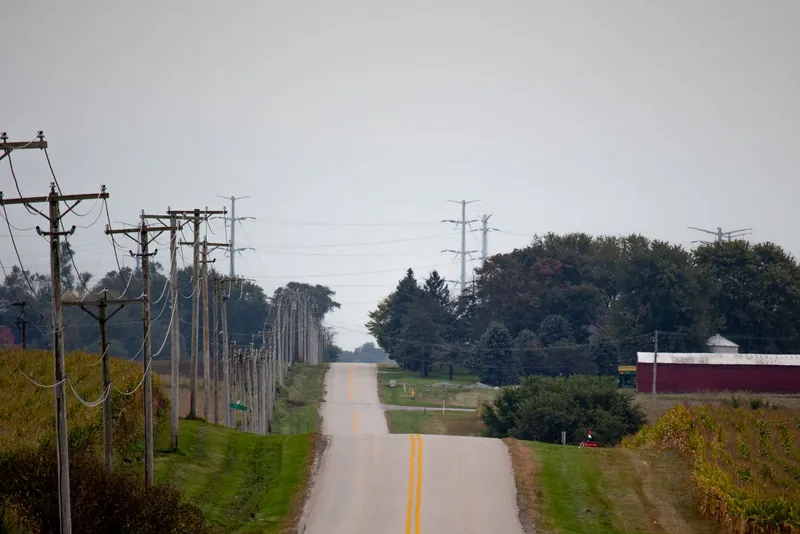
For many pregnant and postpartum families, the nearest place to give birth is not close. When a hospital closes its obstetric unit, or a county never had one, a routine prenatal visit can mean a long drive, and an urgent postpartum symptom can mean a longer one. This article reviews what the research says about maternity care deserts and rural access, where findings are strong, where they are mixed, and how a doula can support rural families while staying within the doula role.
Key takeaways
Quick answer: a 2026 review reports that over 35 percent of U.S. counties are designated maternity care deserts, and a national study found that hospital obstetric unit closures were associated with an average of about 14 additional minutes of travel to the nearest obstetric hospital, more in rural areas. Evidence that closures directly worsen outcomes is mixed, so the safest reading is that distance and workforce gaps are real barriers whose effects vary.
- A maternity care desert is a county without obstetric clinicians or birthing facilities. Those counties are home to more than 2.3 million reproductive-aged women and account for over 150,000 births annually, according to a 2026 review by Stoneburner and colleagues.
- Closures lengthen travel time, especially in rural areas (16.9 minutes in rural tracts versus 10.3 in urban tracts, in a 2010 to 2021 analysis).
- An Iowa study found little evidence that closures within five years before birth changed infant health or maternal care outcomes, so the link between closure and outcomes is not settled.
- Rural doulas describe long distances and poverty as barriers to their own work, which means doula care itself can be scarce where it may be most wanted.

What a maternity care desert is
Anders and Cammack (2026) describe maternity care deserts as counties that lack obstetric-specific clinicians, such as obstetricians, family physicians or certified nurse midwives, and also lack birth centers or hospitals with obstetric units. They connect this to more out-of-hospital births, deliveries in emergency departments, and births at hospitals that are not equipped to manage obstetric and neonatal emergencies. They list several drivers of obstetric unit closures: reduced clinician staffing, declining birth volumes and counties with limited income. The Society for Maternal-Fetal Medicine’s 2026 special statement adds that access to maternal-fetal medicine subspecialty care is also falling, and that high-risk pregnancies, which need more specialized care, are becoming less accessible.
Stoneburner and colleagues (2026) report that over 35 percent of U.S. counties are designated maternity care deserts, and that limited access is associated with delayed prenatal care, increased preterm birth and higher maternal mortality. They also name contributing factors beyond geography: hospital closures, clinician shortages, restrictive policies and gaps in insurance coverage that disproportionately affect Medicaid recipients and communities of color. This is a narrative review, and associations in it should not be read as proof that distance alone causes the outcomes.

What closures do to travel
Ranchoff and colleagues (2026) examined 60,516 census tracts in 3,033 continental U.S. counties from 2010 to 2021. Tracts in counties that lost all in-county hospital obstetric services saw an average increase of 13.8 minutes in travel time to the nearest obstetric hospital. The increase was 16.9 minutes in rural areas and 10.3 in urban areas. The authors note that travel time is a barrier because almost all U.S. births occur in hospitals. The study measures travel time from tract centers, not what individual families experienced, and it does not measure outcomes.
What closures do to outcomes: mixed evidence
Wehby (2025) studied Iowa births from 1994 to 2009 and compared outcomes for mothers living in counties with an obstetric unit closure within five years before the birth. The study found overall little evidence that closures affected school test scores, infant health or maternal care outcomes. Some estimates, such as a small difference in gestational age and birthweight in one model, were statistically significant, but they were small and did not hold in a second model. The author recommends studying how closures affect continuity of care, and whether effects differ for people with high-risk pregnancies.
That finding sits beside the 2026 reviews, which report worse outcomes in care deserts. The two are not necessarily in conflict, since the studies measure different things in different places and years. But they show why careful writing avoids saying that a closure caused a particular outcome. What the evidence supports is that closures make care harder to reach, and that some groups, especially people with high-risk pregnancies, are likely to be most affected. Ruiz (2026) adds, in a commentary, that many pregnant patients bypass local services even where they exist, and argues that trust, continuity and workforce stability matter as well as distance. A commentary is an argument built on literature, not a measurement.
Doula access in rural places
A study of doulas in Georgia (Comstock and colleagues, 2025) surveyed and interviewed 22 doulas, 17 of whom serve rural clients. They described significant perinatal and social service gaps, rural poverty that limits options including doula access, long distances between doulas, clients and health care, and childbirth education gaps that doulas could help fill. The sample is small and from one state, so the findings are best read as a picture of experience, not a measure of national access.
What this means for doulas
- Help families plan, not diagnose. Encourage clients to ask their clinician where to go if something urgent happens, which hospital is the backup, and when to leave for the hospital. Doulas do not decide when labor requires medical care.
- Support practical planning. Ask about transportation, childcare and time off work for visits. Help a family map prenatal and postpartum appointments, and think through who can drive, what to pack and what to do if the weather is poor.
- Use virtual contact where it helps. Stoneburner and colleagues describe telehealth as a promising way to extend access in rural areas. For doulas, virtual check-ins can supplement in-person support, but they do not replace emergency services or clinical care.
- Keep referrals current. Rural referral lists change as clinics open and close. Check them regularly, and be clear with clients about what you can and cannot do.
- Be honest about your own reach. If you travel long distances to serve clients, set boundaries on response time and backup coverage in your agreement.
Putting it into practice
- Before a client’s third trimester, ask where they plan to give birth and how long the trip takes in good and poor conditions.
- Suggest they ask their clinician for written guidance about when to head in and what the backup plan is. Record that you suggested this, without recording a medical plan of your own.
- Prepare a short list of urgent warning signs from a reputable source and a list of local services, such as lactation support and behavioral health resources, with contact details checked in the past three months.
- Arrange postpartum contact by phone or video when travel makes visits hard.
- Join or start a local network of doulas and referral partners, since distance is a barrier to doulas too. Our article on building a referral network offers a starting framework.
Limits and uncertainty
The sources reviewed combine narrative reviews, a national analysis of travel time, a single-state outcome study and a small qualitative study. Travel time is not the same as outcome, and the Iowa data end before 2010, so they may not reflect current conditions. The counts and designations come from the 2026 review and may change as units open and close. The evidence does not tell us whether doula care improves outcomes for rural families specifically.
The bottom line
Rural families face measurable barriers to maternity care, including longer travel when obstetric units close and fewer clinicians. The evidence that closures directly worsen outcomes is less clear than the evidence that they make care harder to reach. Doulas can help families plan and stay connected, within the limits of the role, and should send medical questions to the care team.
Birth & Baby University’s For Doulas page outlines its online, self-paced birth and postpartum doula training, recertification and mentorship, which can suit doulas building a practice that serves families at a distance from services.
This article is for professional education. It is not medical, legal, financial or tax advice. Check the standards of your certifying organization and the rules where you work.
Sources and further reading
- Stoneburner A, Lucas R, Chestnut JF, Jones EE, DeMaria AL. Nowhere to go: an overview of maternity care access across the U.S. Seminars in Perinatology (2026). Read the source
- Anders AP, Cammack SE. Maternity care deserts: disparities in maternal and infant access to care and potential solutions. NeoReviews (2026). Read the source
- Society for Maternal-Fetal Medicine. SMFM Special Statement: opportunities to improve access to maternal-fetal medicine care in rural and underserved communities. Pregnancy (2026). Read the source
- Ranchoff BL, Kofner A, Baker O, et al. Effect of hospital obstetrics unit closures on travel time to obstetric care in the United States. O&G Open (2026). Read the source
- Wehby GL. Obstetric unit closure effects on child academic achievement, infant health, and maternal care. Maternal and Child Health Journal (2025). Read the source
- Ruiz J. Access is not utilization: why sustainable rural maternity care requires investment in women’s trust, continuity, and workforce stability. Journal of Primary Care and Community Health (2026). Read the source
- Comstock S, Lindsey A, Narasimhan S, et al. “I live in a doula desert”: a community-engaged study of doula care in rural Georgia. Women’s Health Reports (2025). Read the source
More for professionals: the Professionals Blog.

Leave a Reply