
By Birth & Baby University · Last updated: October 2026 · 9 min read
Safe sleep is the one topic on which a postpartum doula’s accuracy matters most. Each year in the United States about 3,500 infants die of sleep-related causes, and many of those deaths happen in settings that parents did not recognize as risky. Doulas see babies sleep in homes, not in clinics, which means they see the surfaces, the bedding and the exhausted adults who are making decisions at 4 a.m. The core recommendations are well established and were updated by the American Academy of Pediatrics (AAP) in 2022, with parent-facing pages revised again in 2026. This article summarizes them, notes where other professional bodies take a different line, and explains what a doula can and cannot do.
Key takeaways
Quick answer: according to the AAP, babies should sleep on their backs, alone, on a firm, flat, noninclined surface made for infant sleep, in the parents’ room but not their bed, with nothing else in the sleep space. Breastfeeding, pacifier use at sleep times, a smoke-free environment, routine immunization and avoiding overheating are additional ways to lower risk. Doulas should model and teach these practices and send medical and housing questions to the right professionals.
- The AAP 2022 policy statement says about 3,500 infants die each year in the US of sleep-related deaths, that the death rate has been stagnant since 2000 after a decline in the 1990s, and that disparities persist.
- The AAP recommends supine positioning, a firm noninclined sleep surface, room sharing without bed sharing, and avoiding soft bedding and overheating, with additional recommendations on human milk feeding, avoiding nicotine, alcohol, marijuana, opioids and illicit drugs, routine immunization and pacifier use.
- Federal law bans inclined sleepers (surface above 10 degrees) and crib bumpers: the Safe Sleep for Babies Act took effect on November 12, 2022.
- A meta-analysis of 18 case-control studies found breastfeeding was associated with lower SIDS risk (multivariable summary odds ratio 0.55 for any breastfeeding), with a stronger association for exclusive breastfeeding in unadjusted analysis.
What the research says
The 2022 AAP update. The AAP’s policy statement, Sleep-Related Infant Deaths: Updated 2022 Recommendations for Reducing Infant Deaths in the Sleep Environment (Moon and colleagues, task force on SIDS), notes that after a substantial decline in sleep-related deaths in the 1990s the overall rate has stayed flat since 2000. It uses the triple risk model, in which SIDS occurs when an infant with intrinsic vulnerability encounters an exogenous trigger, such as an unsafe sleep environment, during a critical developmental period. The statement reaffirms supine positioning, a firm noninclined surface, room sharing without bed sharing and avoiding soft bedding and overheating, and presents new recommendations on noninclined surfaces, short-term emergency sleep locations, cardboard boxes as a sleep location, bed sharing, substance use, home cardiorespiratory monitors and tummy time. This article draws on the abstract of this statement and of its accompanying technical report; the details below are from the AAP’s parent-facing summary, How to Keep Your Sleeping Baby Safe: AAP Policy Explained (updated September 2026).
What the AAP tells parents. The summary says to place babies on their backs for all naps and nights, because the side position is just as dangerous as the stomach position, and says babies will not choke on their backs, including babies with reflux. It says a surface is firm if it does not indent, that any surface inclined more than 10 degrees is unsafe for sleep, that parents should use a crib, bassinet, portable crib or play yard that meets Consumer Product Safety Commission standards with a tight-fitting mattress and a fitted sheet only, and that products not marketed for infant sleep, such as Boppy pillows, are not appropriate. If a baby falls asleep in a car seat, stroller, swing, carrier or sling, the baby should be moved to a firm surface on their back as soon as possible. In an emergency a box, basket or dresser drawer with thin, firm padding can be a temporary sleep space. It recommends room sharing for at least the first six months, saying it can cut SIDS risk by as much as 50%, and it recommends avoiding bed sharing under any circumstances, including with twins. It gives risk figures for bed sharing: risk is up to 67 times higher on a couch, soft armchair or cushion, more than 10 times higher with someone fatigued or affected by medication, alcohol or drugs, and 5 to 10 times higher for babies under 4 months, while it is 2 to 5 times higher for preterm or low birth weight babies. It advises keeping soft objects and loose bedding out of the sleep area, dressing babies in only one more layer than adults, not using weighted blankets, sleepers or swaddles, and not putting a hat on an indoor baby once home from the hospital. Other items include feeding breast milk, offering a pacifier at nap and bedtime once breastfeeding is established, avoiding smoke and vapor, attending well-child visits and immunizations, and awake, supervised tummy time. It says swaddling does not reduce SIDS risk and should stop when the baby tries to roll over.
Federal product rules. The Consumer Product Safety Commission’s Safe Sleep for Babies Act guidance states that effective November 12, 2022, regardless of manufacture date, inclined sleepers for infants (an inclined sleep surface greater than ten degrees intended or marketed for infant sleep up to 1 year) and crib bumpers are banned hazardous products. This article draws on the page through a text-extraction fetch. That helps explain why an old registry item or a secondhand product can be non-compliant even if it was once sold legally.
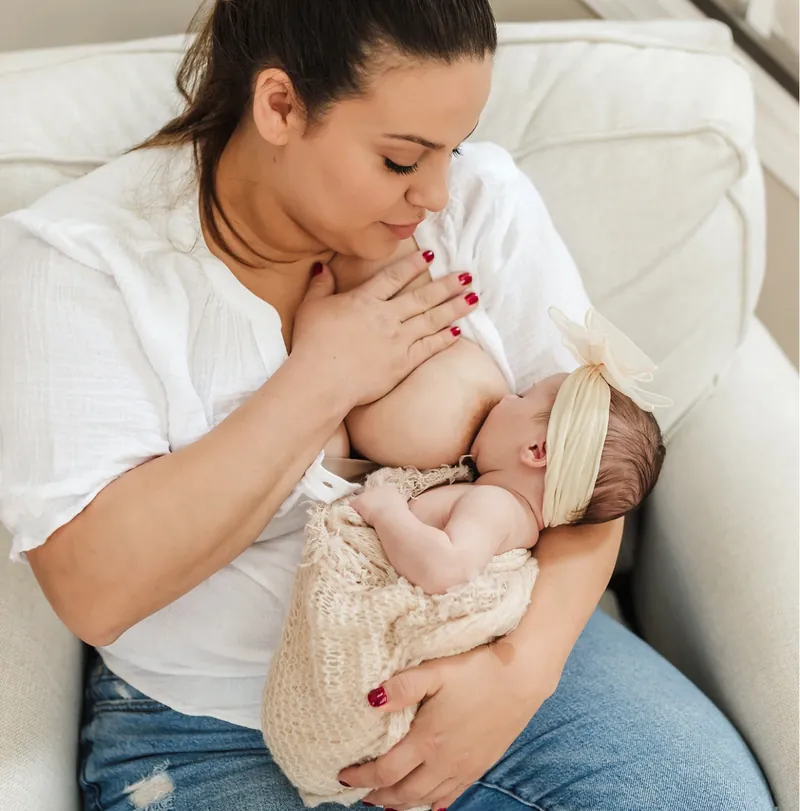
Breastfeeding and SIDS. Hauck and colleagues’ 2011 meta-analysis in Pediatrics combined 18 case-control studies. For any breast milk the multivariable summary odds ratio was 0.55 (95% confidence interval 0.44 to 0.69), and the unadjusted odds ratio for exclusive breastfeeding was 0.27 (0.24 to 0.31). The authors concluded that breastfeeding is protective against SIDS, more so when exclusive. Case-control studies cannot rule out other differences between families, which is one reason the AAP lists breastfeeding as one component among several.

What this means for doulas
- Use the AAP framing as the baseline. Whatever a family has heard elsewhere, a doula working in the US should be able to state the AAP recommendations accurately and consistently. Where your employer or certifier requires a specific policy, follow it.
- Be specific and concrete. “Back, alone, bare, firm and flat” is memorable, and the details (no inclines, no pillows, no bumpers, no weighted items) are what families miss.
- Check the actual sleep space. A doula can look at the surface, the sheet and what else is in the bassinet, and gently suggest removing blankets, stuffed toys or loungers. Do not recommend specific products and point families to CPSC for recalls.
- Talk about the tired moment. The most dangerous situations described are sofas and chairs with a sleeping adult, and impaired or very fatigued adults. Plan with the family for who is awake and where the baby sleeps when a parent is exhausted. See Supporting Exhausted Parents While Maintaining Evidence-Based Safe Sleep Practices.
- Do not diagnose or reassure on medical risk. A baby with reflux, breathing noises or a medical condition needs the pediatric provider’s advice, which may differ for preterm or medically complex infants.
Putting the evidence into practice
- Do a safe sleep walk-through on the first visit: where does the baby sleep at night, for naps, and in the car seat or swing? What is in the space?
- Use teach-back. Ask the parent to tell you how they would set up a nap, and fill in gaps without judgment.
- Offer a one-page handout built from the AAP summary, with space for the family’s emergency contacts. Date it, because guidance is revised.
- Address swaddling and white noise explicitly, since families ask about them. See Swaddling and Infant Sleep: Benefits, Risks, and When to Stop and White Noise and Infant Sleep: What Does the Research Actually Show?.
- Cover bed sharing honestly. Some professional bodies take a different position (see Room-Sharing Versus Bed-Sharing: Understanding the Evidence and Risk Factors), but a doula should not endorse bed sharing as safe. Help families plan to reduce risk, and refer them to the pediatric provider for individual advice.
Limits and uncertainty
Recommendations are based largely on case-control and surveillance data, with grades of evidence that vary by item, and this article draws only on the abstracts of the AAP statement and its technical report, plus the AAP’s parent-facing summary, not the full evidence base. Percentages such as “as much as 50%” and the multiples for bed sharing come from the AAP summary of the underlying studies. Guidance in other countries differs, including on bed sharing (see the companion article). The meta-analysis on breastfeeding is more than a decade old and association is not proof of causation. Babies born preterm, with medical conditions or in the NICU may have different instructions. The CPSC page was read through a fetch tool. This article does not address specific products.
The bottom line
The AAP’s message is consistent and practical: back, alone, bare, firm and flat, in the parents’ room, with smoke-free air, breastfeeding if possible, a pacifier at sleep times if wanted, and no products that are not made for infant sleep. The evidence behind each item is uneven, but the cost of following it is low and the stakes are high. A doula’s role is to make the guidance concrete in the family’s own space, to plan for exhaustion, and to refer medical questions.
Birth & Baby University’s For Doulas page brings together its postpartum doula training, recertification and mentorship for doulas who support families in the newborn weeks, including safe sleep education. Confirm that any program meets your certifier’s, employer’s or state’s requirements before you enroll.
This article is for professional education. It is not medical, legal or tax advice. Check the standards of your certifying organization and the rules where you work. For concerns about a baby’s health, contact a pediatric provider or emergency services.
Sources and further reading
- Moon RY, et al.; AAP Task Force on Sudden Infant Death Syndrome. Sleep-related infant deaths: updated 2022 recommendations for reducing infant deaths in the sleep environment. Pediatrics (2022). Read the source
- Moon RY, et al. Evidence base for 2022 updated recommendations for a safe infant sleeping environment to reduce the risk of sleep-related infant deaths. Pediatrics (2022). Read the source (abstract only)
- American Academy of Pediatrics. How to Keep Your Sleeping Baby Safe: AAP Policy Explained (HealthyChildren.org, updated September 2026). Read the source
- U.S. Consumer Product Safety Commission. Safe Sleep for Babies Act business guidance. Read the source (read October 2026)
- Hauck FR, et al. Breastfeeding and reduced risk of sudden infant death syndrome: a meta-analysis. Pediatrics (2011). Read the source
More for professionals: the Professionals Blog.
Leave a Reply