
By Birth & Baby University · Last updated: October 2026 · 7 min read
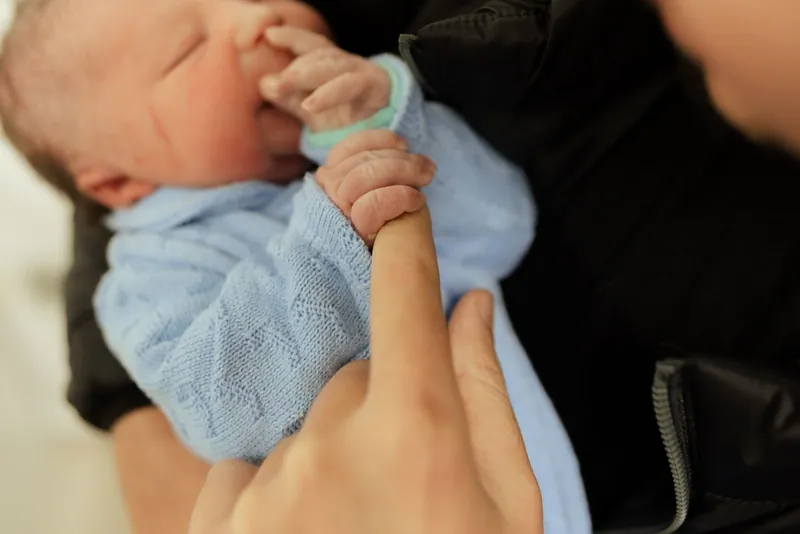
Parents love newborn reflexes. The startle that flings the arms wide, the tiny hand that clamps around a finger and the head that turns toward a touch on the cheek are all things families photograph, share and ask about. Postpartum doulas are often asked what these movements mean. The honest answer is that reflexes are real, well described and clinically useful to the people who examine babies, while a doula’s role is to explain what parents are seeing, support feeding and know when to say “mention this to your pediatrician.” This article sets out what the published sources say, where they disagree, and where popular claims have outrun the evidence.
Key takeaways
Quick answer: reflexes are automatic movements that appear in the newborn period and usually fade over the first months. Clinicians use them as one piece of a neurological picture. Doulas can describe the typical pattern and flag asymmetry or concern, but they do not test, grade or interpret reflexes.
- The American Academy of Pediatrics’ parent site (HealthyChildren.org) lists typical disappearance ages from about 2 months for stepping and the Moro (startle) reflex to 9 to 12 months for the plantar (toe) grasp, and says infants do not all gain and lose reflexes at exactly the same time.
- A pediatric neurology review states that absence of the Moro reflex in the newborn period and early infancy is highly diagnostic of a variety of compromised conditions. That is a finding for clinicians, not a home test.
- Published timing for some reflexes differs between sources. For example, one review describes the plantar grasp as present in normal infants until the end of 6 months of corrected age, while the AAP table says 9 to 12 months.
- Claims that “retained” primitive reflexes in school-age children cause learning problems, and that exercises to “integrate” them help, rest on a small, heterogeneous evidence base that a 2026 systematic review describes as limited.

What the research says
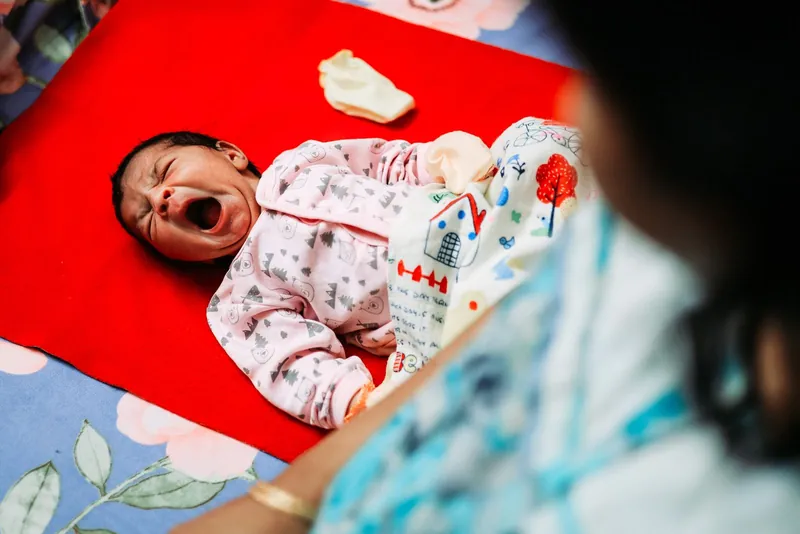
What parents are told. The AAP’s Newborn Reflexes page on HealthyChildren.org (last updated March 2022 and adapted from the seventh edition of Caring for Your Baby and Young Child, so not the newest edition) calls these movements involuntary and says some stay for months while others go in weeks. It gives a table of typical ages: stepping, rooting, palmar grasp, Moro reflex, tonic neck reflex and plantar grasp all appear at birth, and fade at about 2 months, 4 months, 5 to 6 months, 2 months, 5 to 7 months and 9 to 12 months respectively. It adds that not all infants acquire and lose these reflexes at exactly the same time, so the table gives a general idea of what to expect. The same page describes the Moro reflex as a startle in response to an abrupt head position change or a loud sound, in which the baby extends the arms, legs and neck and then rapidly brings the arms together, sometimes with crying. It says the response is present in varying degrees in different babies, peaks during the first month and starts to disappear after about two months. For the tonic neck or “fencing” reflex, it says the response is subtle and a disturbed or crying baby may not show it.
The page makes three points that matter directly to a doula. First, rooting, sucking and bringing a hand to the mouth are considered feeding cues in the first weeks. Second, sucking is described as a reflex that is nonetheless a complicated task to coordinate with breathing and swallowing, so not all babies suck efficiently at first, and with practice the reflex becomes a skill. Third, the Moro and tonic neck reflexes should be present equally on both sides, and parents who notice that a reflex seems different on one side, or that the baby moves one side better than the other, should tell their pediatrician. The page also warns that the grasp can seem strong enough to hold the baby’s weight and that parents should not test this, because the baby has no control and may let go suddenly.
What clinicians use them for. Futagi, Toribe and Suzuki’s 2012 review of the grasp and Moro reflexes describes the plantar grasp reflex as of great clinical significance, especially for detecting spasticity, and says the palmar grasp has diagnostic significance too. The authors state that absence of the Moro reflex during the neonatal period and early infancy is highly diagnostic, indicating a variety of compromised conditions. An earlier review by Futagi and Suzuki on the plantar grasp reflex reports that it can be elicited in all normal infants from 25 weeks postconceptional age until the end of 6 months of corrected age, that a negative or diminished reflex in early infancy is often a sensitive indicator of spasticity, and that infants with the athetoid type of cerebral palsy retain it very strongly. These are narrative reviews written by pediatric neurologists for clinicians. The point for a doula is not the details but the principle: reflex findings are interpreted by a trained examiner against the baby’s age, gestation and overall condition, and an unusual response can be a reason for follow-up, not a diagnosis.
The retained-reflex debate. Some therapists and educators argue that primitive reflexes that persist past infancy interfere with learning, attention or movement, and that movement programs can “integrate” them. A 2026 systematic review in Acta Psychologica by Provazník and colleagues examined children aged 3 to 11 without neurodevelopmental disorders and included 14 studies published between 2004 and 2023. Six studies examined motor development and all reported negative associations with persisting reflexes; six linked persisting reflexes to lower cognitive performance, particularly in reading, spelling and mathematics; and five evaluated interventions, with most showing improved developmental outcomes and effect sizes ranging from small to large. The authors concluded that early identification and targeted movement-based approaches “may be promising,” but also state that the available evidence remains limited and heterogeneous. The sources reviewed here include no large randomized trial that establishes that treating persistent reflexes improves schoolwork. This body of work is about school-age children, not newborns, and association does not show that the reflex causes the difficulty.

What this means for doulas
- Explain, don’t test. A doula can say “this is a Moro reflex; many babies startle like this and it fades over the first couple of months.” A doula should not elicit reflexes to check a baby, grade responses or reassure parents that a baby is neurologically fine.
- Use reflexes to support feeding. Rooting, sucking and hands to mouth are among the early feeding cues AAP describes. Pointing them out helps parents respond early, as described in How Newborns Communicate: Understanding Early Hunger, Stress, and Engagement Cues.
- Reduce alarm without false certainty. A startle that wakes a sleeping baby is expected. Offer the AAP’s reassurance that responses vary by baby and age, and avoid giving exact dates as promises.
- Watch for asymmetry or absence and refer. If parents describe one side moving less, a baby who seems unusually floppy or stiff, or a startle that never happens, encourage a call to the pediatric provider. You are passing on an observation, not interpreting it.
- Be careful with “retained reflex” marketing. If a family asks about reflex-integration programs, you can say the research is limited and mixed and encourage them to talk with their child’s pediatrician about developmental concerns, rather than endorsing or dismissing a program.
Putting the evidence into practice
- Prepare a short, plain script for the reflexes parents ask about most: Moro, grasp, rooting and stepping. Use the AAP’s descriptions and ages as a range, and say that babies vary.
- Offer safe handling tips. Swaddling, containment and supporting the head can calm a startle. Keep claims about swaddling modest and refer to safe sleep guidance for sleep use (see Swaddling and Infant Sleep: Benefits, Risks, and When to Stop).
- Link reflexes to the development story. The stepping reflex fading and later walking being a learned behavior, as AAP describes, is a gentle way to explain that early reflexes and later skills are different things.
- Write down what the parent reports. If a family is worried, a note such as “left arm seems to move less since Tuesday” is more useful at the pediatric visit than an opinion about a reflex.
- Keep scope clear. Say plainly that you are not a medical professional and that the baby’s clinicians perform the actual examination.
Limits and uncertainty
The AAP’s age ranges are general guides adapted from a previous edition of its book, and other sources give somewhat different timing for some reflexes (for instance the plantar grasp), so ages should be described as approximate and as varying between babies. The clinical reviews cited are narrative reviews by pediatric neurology researchers, not trials, and they were written for examiners rather than families. Reflex findings in premature infants are usually interpreted by corrected age, and a baby with a medical condition may be followed differently. The research on persisting reflexes in school-age children is correlational for the most part, the intervention studies are few and varied, and the review authors themselves call the evidence limited. This article draws on abstracts of the reviews through Europe PMC rather than their full text.
The bottom line
Newborn reflexes are normal, expected and mostly temporary. They give families delightful moments, give feeding supporters useful cues and give clinicians important information. For a postpartum doula, the useful posture is calm education: describe what is typical, note that babies differ, point out feeding reflexes, and refer any asymmetry, absence or worry to the baby’s pediatric provider. Be modest about any claims that reflexes explain later learning difficulties, because the research on that question is still limited.
Birth & Baby University’s For Doulas page shows how its postpartum doula training, recertification and mentorship fit together for doulas who support families in the newborn weeks. As with any program, confirm that it meets your certifier’s, employer’s or state’s requirements before you enroll.
This article is for professional education. It is not medical, legal or tax advice. Check the standards of your certifying organization and the rules where you work. For concerns about a baby’s health, contact a pediatric provider or emergency services.
Sources and further reading
- American Academy of Pediatrics. Newborn Reflexes (HealthyChildren.org, last updated March 2022; adapted from Caring for Your Baby and Young Child, 7th edition). Read the source
- Futagi Y, Toribe Y, Suzuki Y. The grasp reflex and Moro reflex in infants: hierarchy of primitive reflex responses. International Journal of Pediatrics (2012). Read the source
- Futagi Y, Suzuki Y. Neural mechanism and clinical significance of the plantar grasp reflex in infants. Pediatric Neurology (2010). Read the source
- Provazník A, et al. Persisting primitive reflexes and motor and cognitive development in children: a systematic review. Acta Psychologica (2026). Read the source
More for professionals: the Professionals Blog.


Leave a Reply