
By Birth & Baby University · Last updated: October 2026 · 4 min read
A complication does not make a doula less useful, but it does change what useful looks like. Families facing gestational diabetes, preeclampsia, a NICU stay or a high-risk delivery often need steadier emotional support, clearer information and help navigating a larger care team. They do not need a doula to act as a clinician. This article lays out scope as professional organizations describe it, and what research says about doulas working alongside medical teams.
Key takeaways
- DONA International describes doula support as emotional, physical and informational only, and states that its doulas do not take blood pressure, check fetal heart tones, perform vaginal exams or diagnose or treat in any modality.
- Continuous support was associated with better outcomes in a Cochrane review, but the benefit depends on role clarity and integration with staff, according to a qualitative synthesis.
- Doulas interviewed in a 2025 study reported conflicts with hospital teams and a need for mentorship, especially with high-risk patients.
- Scope statements vary by organization, state and program. Check the rules that apply to your certification and where you work.

What the research says
What scope statements say
DONA International’s updated Standards of Practice (page dated October 2015) state that certified birth doulas provide “emotional, physical and informational support only,” excluding clinical tasks such as taking blood pressure or temperature, fetal heart tone checks, vaginal examinations and postpartum clinical care, and that the doula “will not diagnose or treat in any modality.” A doula with additional training in areas such as lactation or massage must make clear that those services fall outside the doula’s scope. DONA’s public description adds that birth doulas do not make decisions for the family and work alongside medical providers to support the birthing person’s preferences and well-being. These are one organization’s standards. Other certifying bodies have their own, and the standards you agreed to when you certified govern your practice.
Why support still matters
The Cochrane review of continuous support (26 trials, 15,858 women) associated one-to-one support with more spontaneous vaginal births, fewer cesareans (RR 0.75, 95% CI 0.64 to 0.88) and less negative feeling about the birth experience, in low-quality evidence, with the largest cesarean reduction when the provider was in a doula role. Those trials were not limited to medically complex pregnancies, and the pooled estimates are not a doula-only effect. ACOG’s Committee Opinion 766 on approaches to limit intervention during labor and birth is a professional guidance source on the topic, which this article cites by its record only.
Working inside a team
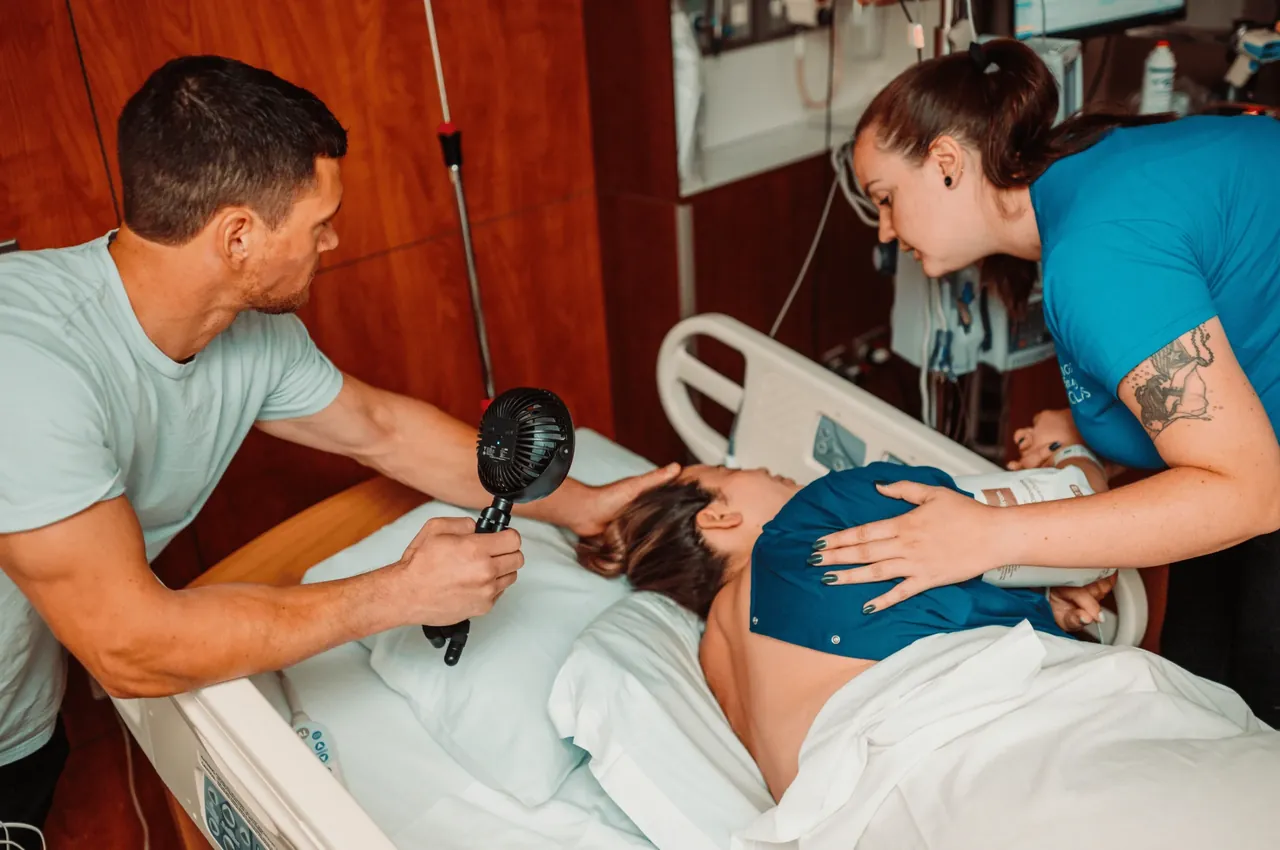
A Cochrane qualitative evidence synthesis of labour companionship found that doulas often met women before birth to build rapport and manage expectations, that some providers were resistant to or poorly trained to use companions, that lay companions were often not integrated into antenatal care, and that clear roles for companions and providers were thought to matter. Several findings had low confidence. A 2025 qualitative study of seven doulas, five identifying as Black or African American, described barriers to inclusion in hospital team-based care and facilitators for collaboration, and emphasized mentorship for novices moving into hospital settings, particularly with high-risk patients. Seven participants is a small sample, and the findings describe experiences, not rates.
An example of integrated care
The PeliCaN study’s qualitative analysis interviewed 20 mothers of infants under 34 weeks in the NICU about a model pairing a doula with a certified nurse midwife who delivered postpartum care. The parent trial reduced time to postpartum care. Mothers described the doula’s roles in care coordination, prioritizing the mother’s own postpartum care, resource coordination and guidance, alongside the midwife’s bedside care. That is one program with a defined clinical partner, not a general description of doula practice.
What this means for doulas
- Know your written scope. Re-read your certification standards and code of ethics. When a situation is unclear, ask: is this emotional, physical or informational support, or is it assessment, diagnosis or treatment?
- Add information with a referral. When you share general information, advise clients to check with their provider before acting on it.
- Do not interpret clinical findings. Help clients write questions and understand explanations. Do not read lab results, monitor readings or scans on their behalf.
- Be a bridge, not a barrier. Introduce yourself to staff, state your role, and support the client’s communication with the team.
- Have an escalation habit. For warning signs, bleeding, severe pain, reduced fetal movement or breathing trouble, the response is immediate contact with the care team or emergency services.
Putting the evidence into practice
- Include a plain-language scope statement in your client agreement and review it at the first visit.
- For each complication a client has, learn the basics from reliable sources and prepare questions, not advice.
- Make a referral list: lactation, mental health, dietitian, pelvic health, social work. Keep it current and local.
- Ask for mentorship or peer review when you take on higher-need clients, and debrief difficult births.
- Check state and local rules, including any certification or billing requirements. This article did not verify requirements by state.
The bottom line
When pregnancy becomes medically complex, the doula’s value lies in steady presence, information that helps families ask good questions, and respectful collaboration, not in clinical judgment. Clear scope protects clients and builds trust with the care team.
This article is for professional education. It is not medical, legal or tax advice. Check the standards of your certifying organization and the rules where you work.
Sources and further reading
- DONA International. Updated Standards of Practice from DONA International. Web page dated October 21, 2015; read 16 October 2026. Read the source
- DONA International. What is a Birth Doula? Web page, read 16 October 2026. Read the source
- Bohren MA, et al. Continuous support for women during childbirth. Cochrane Database of Systematic Reviews 2017. Read the source
- Bohren MA, et al. Perceptions and experiences of labour companionship: a qualitative evidence synthesis. Cochrane Database of Systematic Reviews 2019. Read the source
- Burke LT, et al. Racial Minority Doulas’ Perceptions of Hospital Team-Based Care. MCN: American Journal of Maternal Child Nursing 2025. Read the source
- Corson CL, et al. Facilitating Postpartum Care with a Doula and Certified Nurse Midwife in the Neonatal Intensive Care Unit: A Qualitative Analysis of Maternal Experiences. Pregnancy 2025. Read the source
- American College of Obstetricians and Gynecologists. Committee Opinion No. 766: Approaches to Limit Intervention During Labor and Birth. Obstetrics & Gynecology 2019. Read the source
Clear scope and strong referral habits are part of professional training and mentorship. See Birth & Baby University’s doula training, recertification and mentorship options on the For Doulas page.
More for professionals: the Professionals Blog.



Leave a Reply